
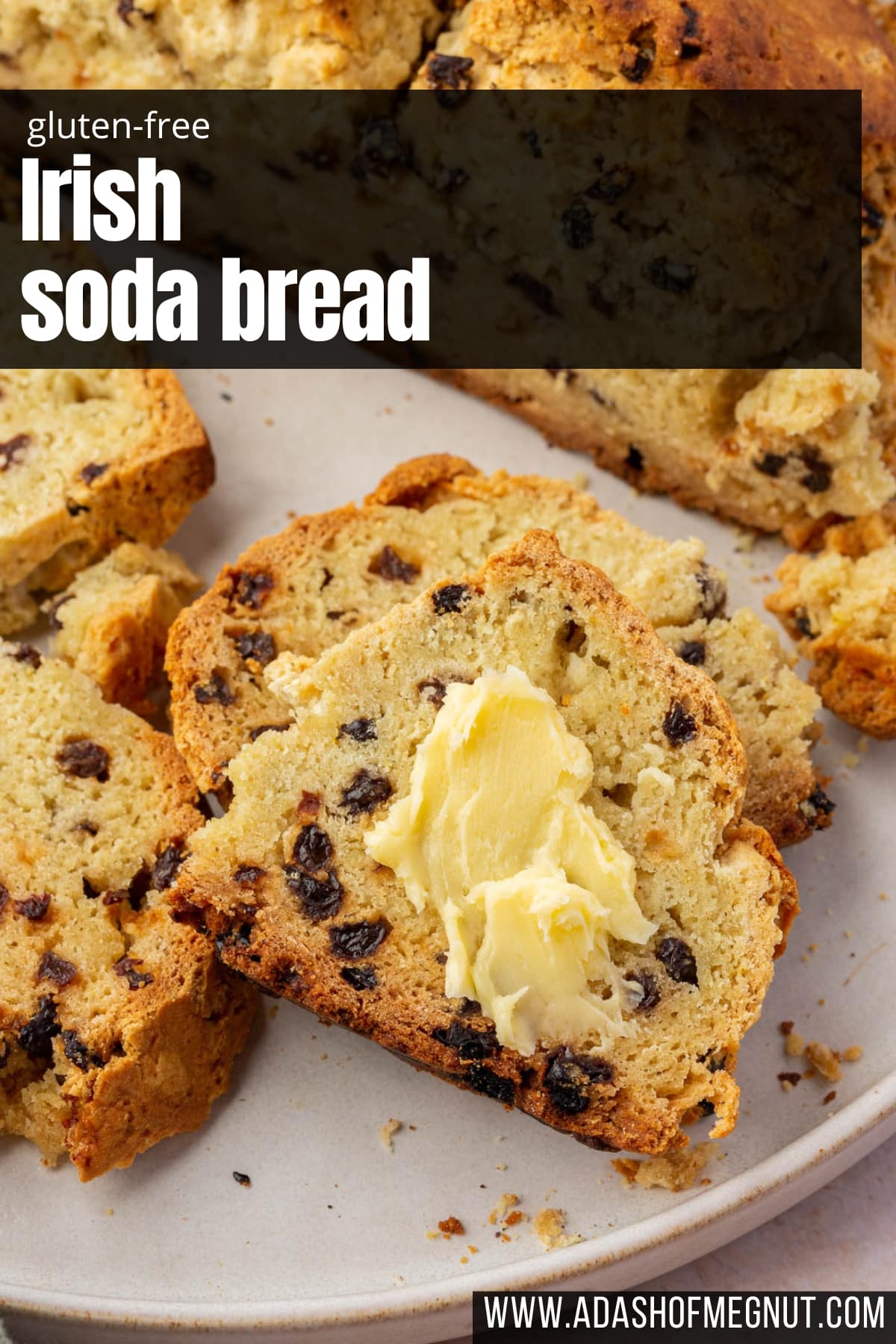
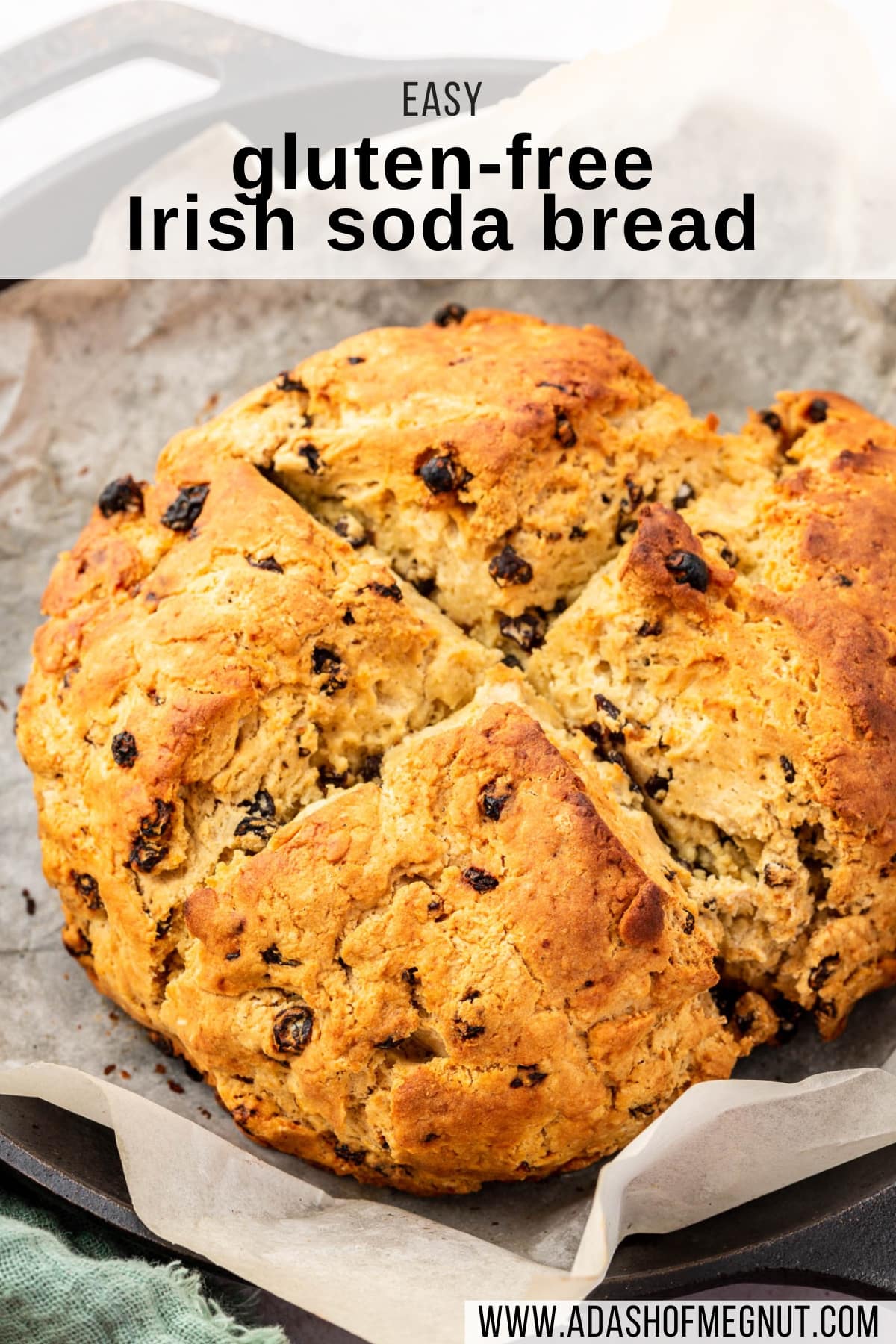
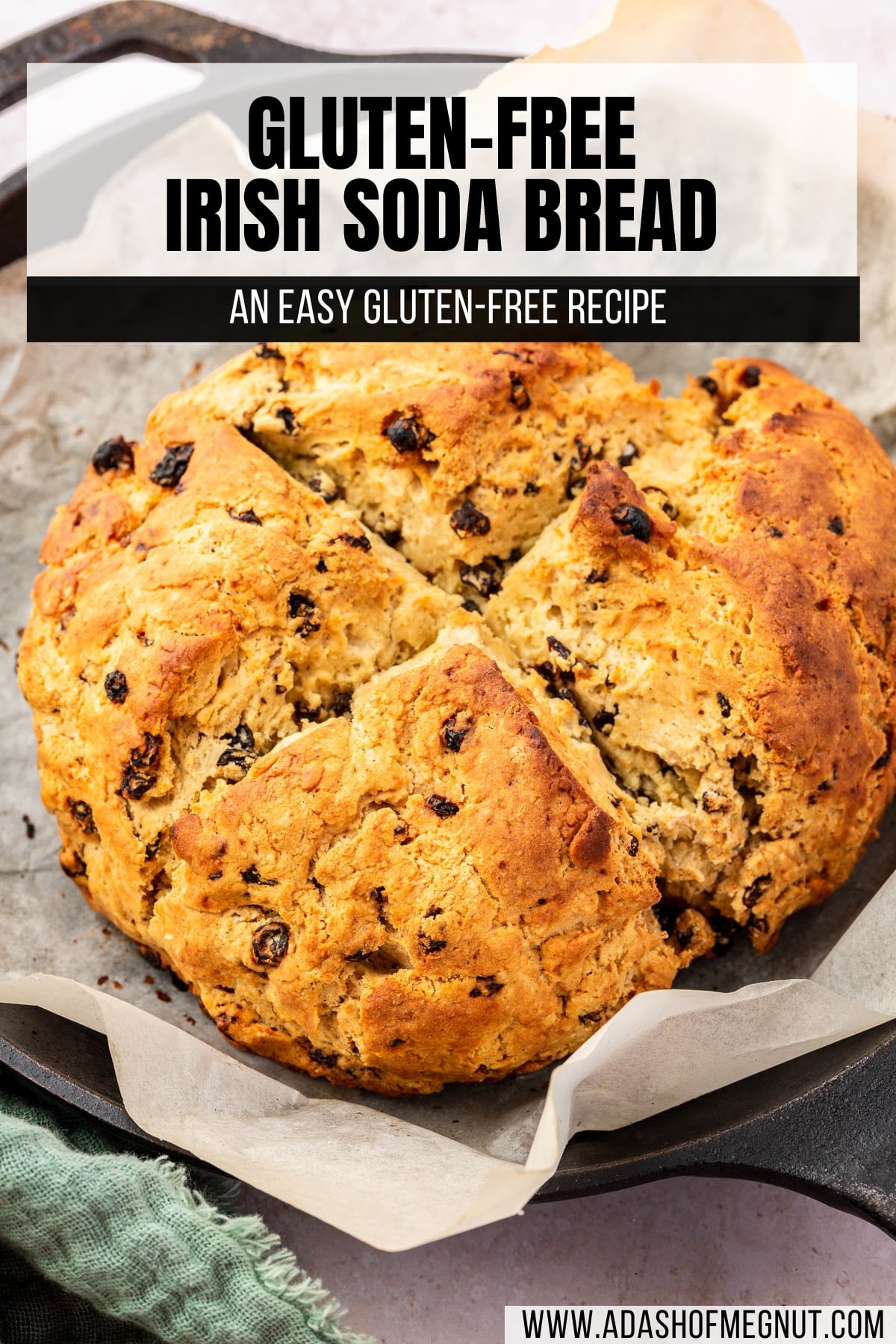
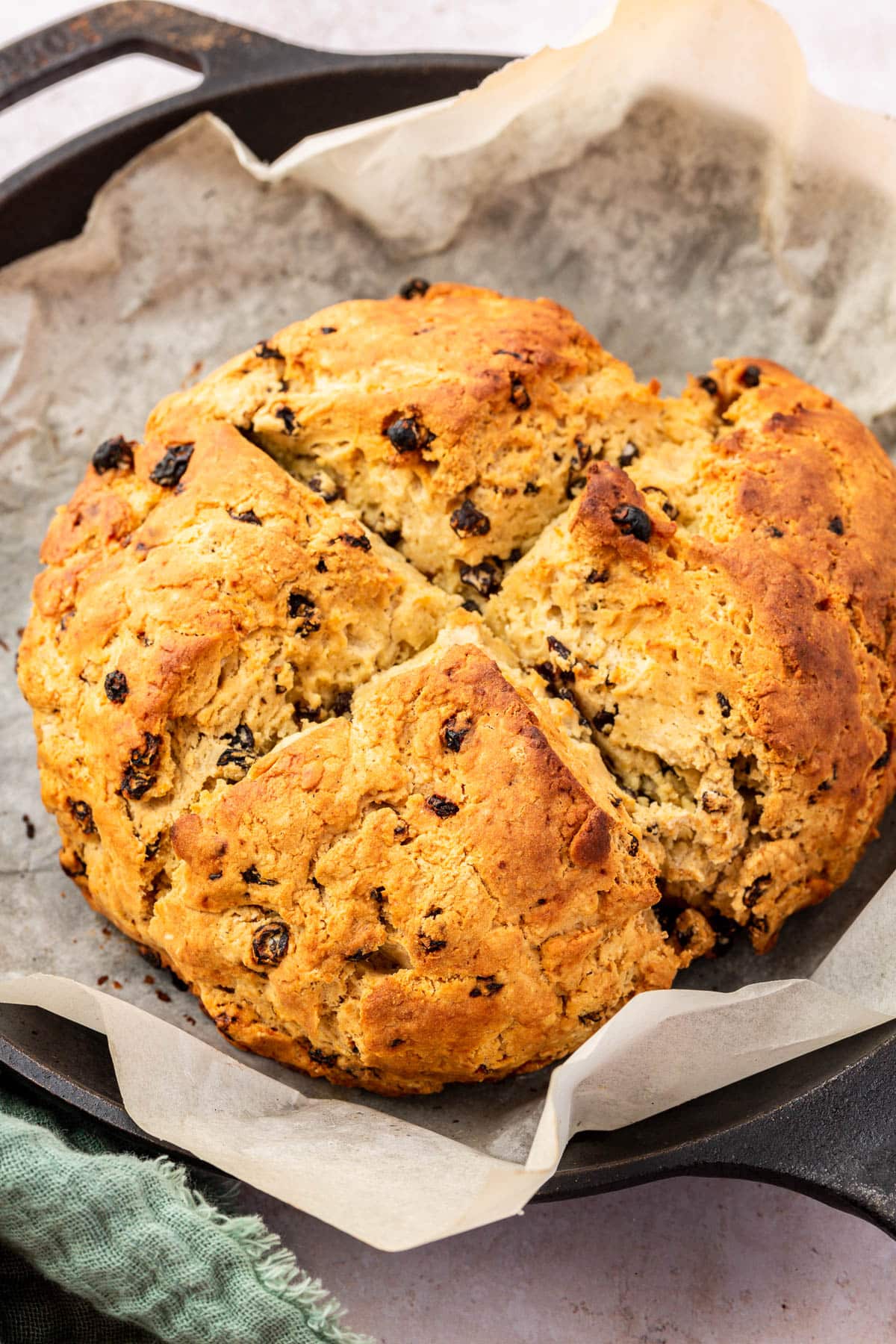
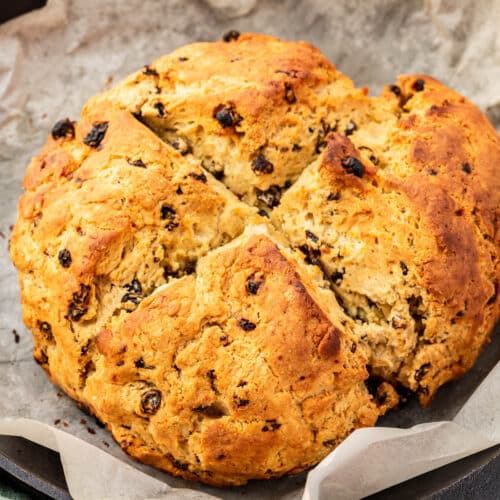
This gluten-free Irish soda bread is a quick bread made with buttermilk, baking soda, and a gluten-free flour blend. There’s no yeast and no kneading. You cut cold butter into the dry ingredients, stir in the wet, shape it into a round, and bake. The whole thing takes about an hour from start to finish.
This recipe is based on my grandma’s Irish soda bread with currants. While currants aren’t typical in Ireland, they’re common in Irish-American households. My grandpa came to the US from Ireland in his early 20’s, and if he says currants are okay in Irish soda bread, I’m going with it.
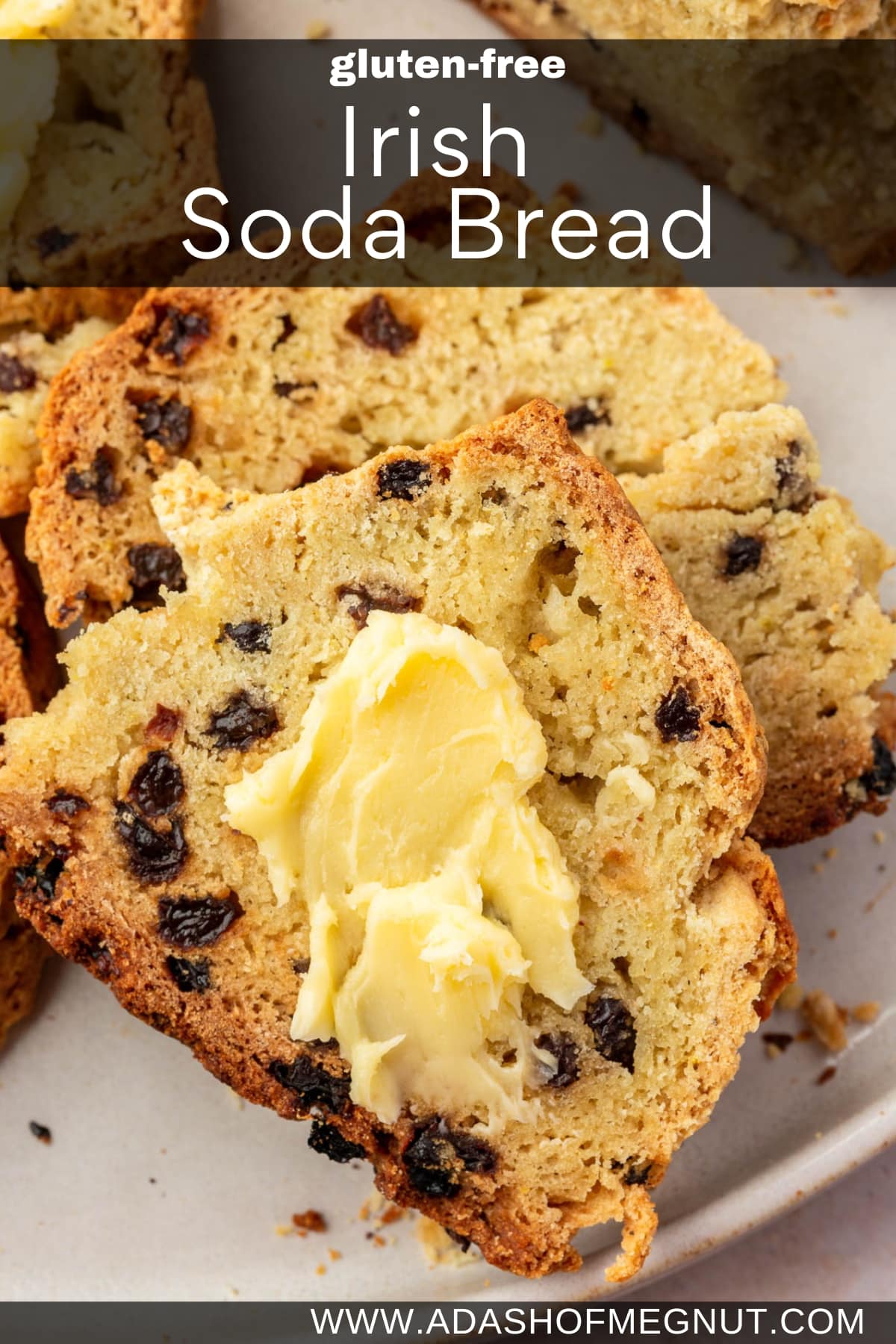
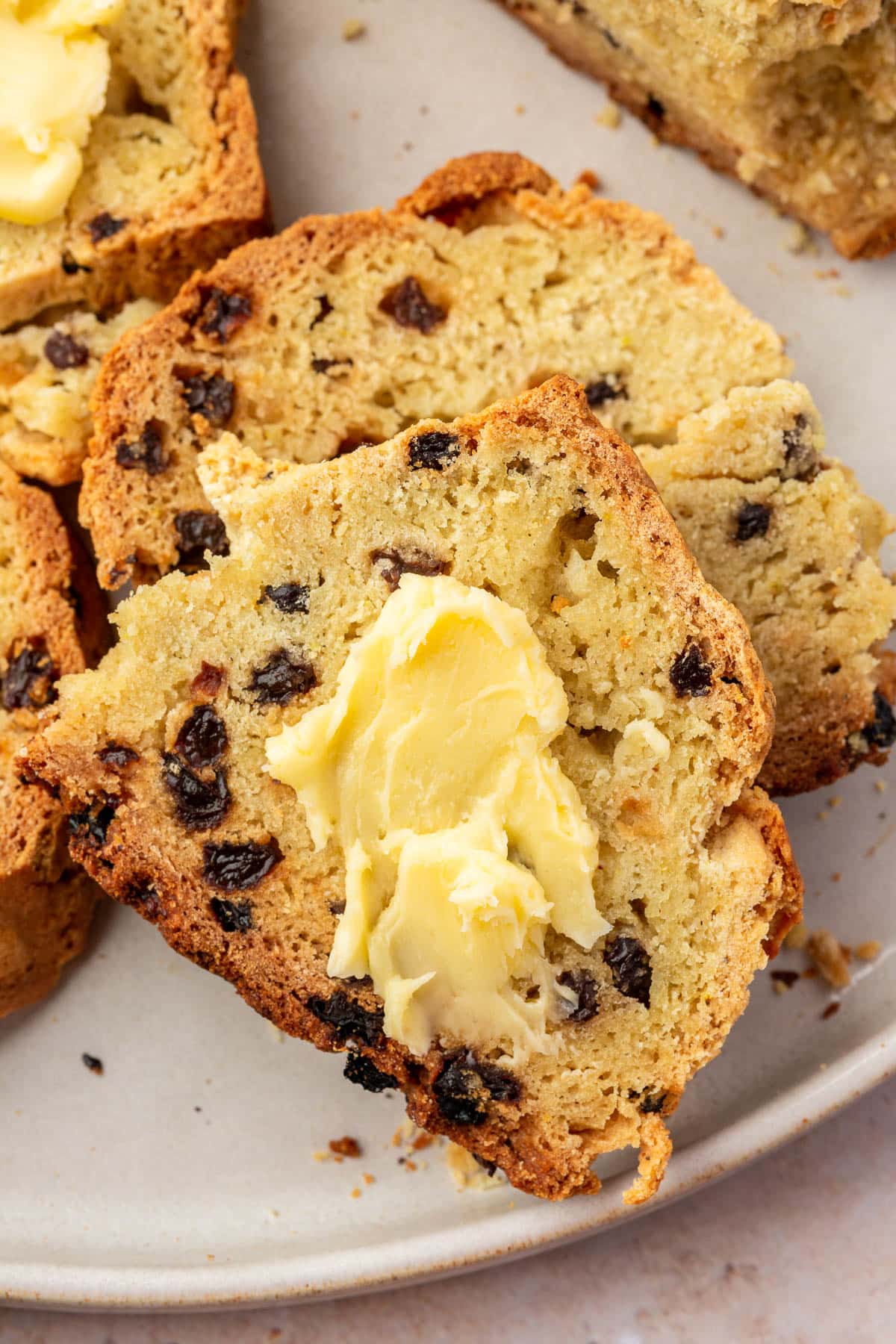
The bread has a subtle sweetness and a tender, hearty crumb. It’s best served warm with a thick pat of Irish butter, or sliced and toasted the next day. I make it every year for St. Patrick’s Day, but it’s good anytime you want fresh bread without the wait.
Why You’ll Love this Recipe
Ingredients
Ingredient Notes
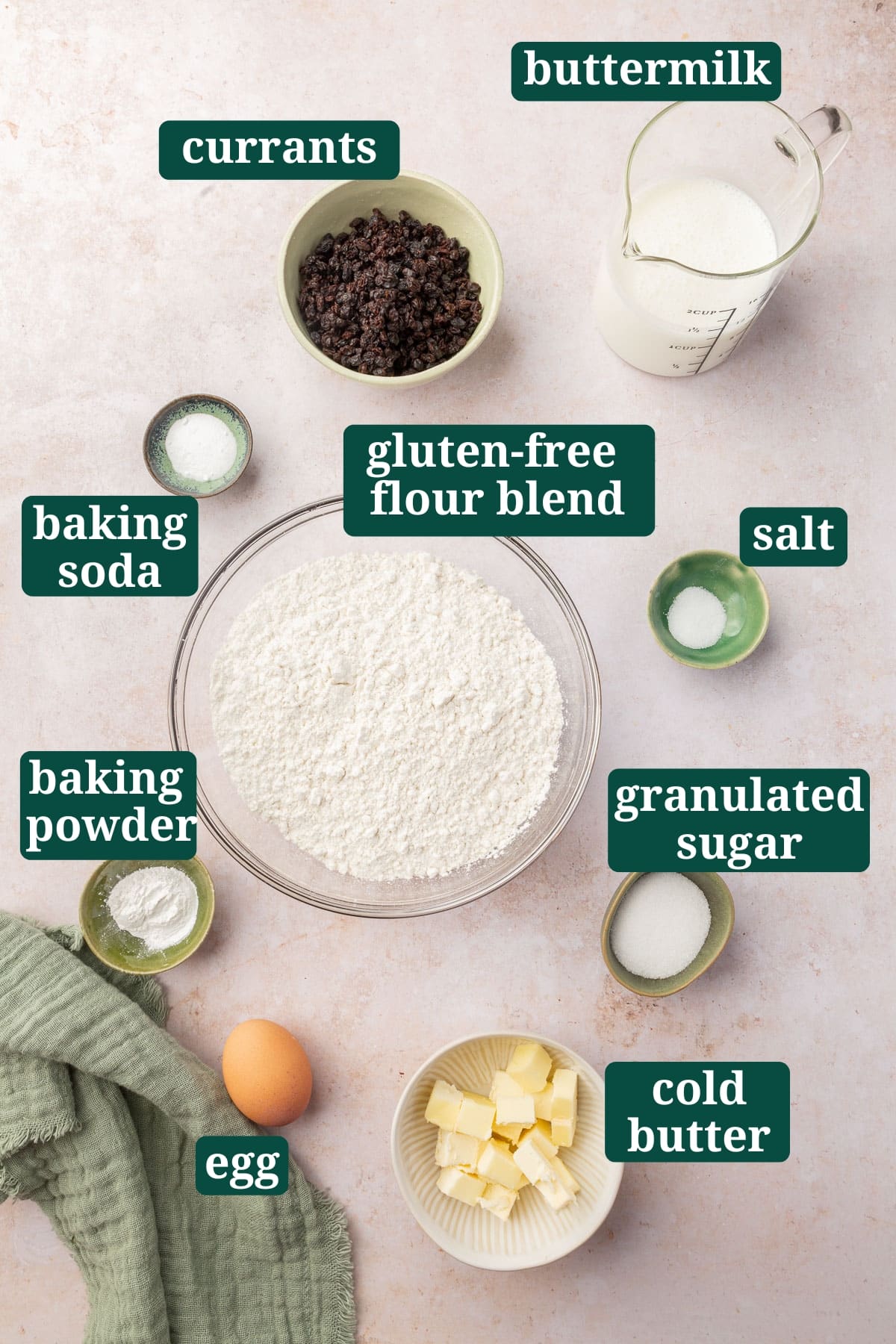
- Gluten-Free Flour Blend – I used Bob’s Red Mill 1-to-1 Gluten-Free Baking Flour, which already contains xanthan gum. I haven’t tested other blends so I can only recommend this one.
- Buttermilk – Use real buttermilk, not a substitute, for the best flavor and texture. It should be cold.
- Unsalted Butter – Must be cold and cubed. Cold butter creates pockets of steam as it bakes, which gives the bread a more tender crumb.
- Egg – I tested this recipe with and without an egg. The loaf without egg was dense and gummy along the bottom. The egg makes the bread lighter with a much better crumb. Don’t skip it.
- Baking Powder + Baking Soda – Traditional soda bread only uses baking soda, but too much baking soda on its own leaves a bitter aftertaste. The combination of both gives the bread plenty of lift without the bitterness.
- Granulated Sugar – Just 2 tablespoons. You won’t really taste it, but it improves the texture.
- Currants – Not traditional in Ireland, but common in Irish-American soda bread. Golden raisins, caraway seeds, or fresh herbs like dill or rosemary all work as swaps.
Don’t Overwork the Dough
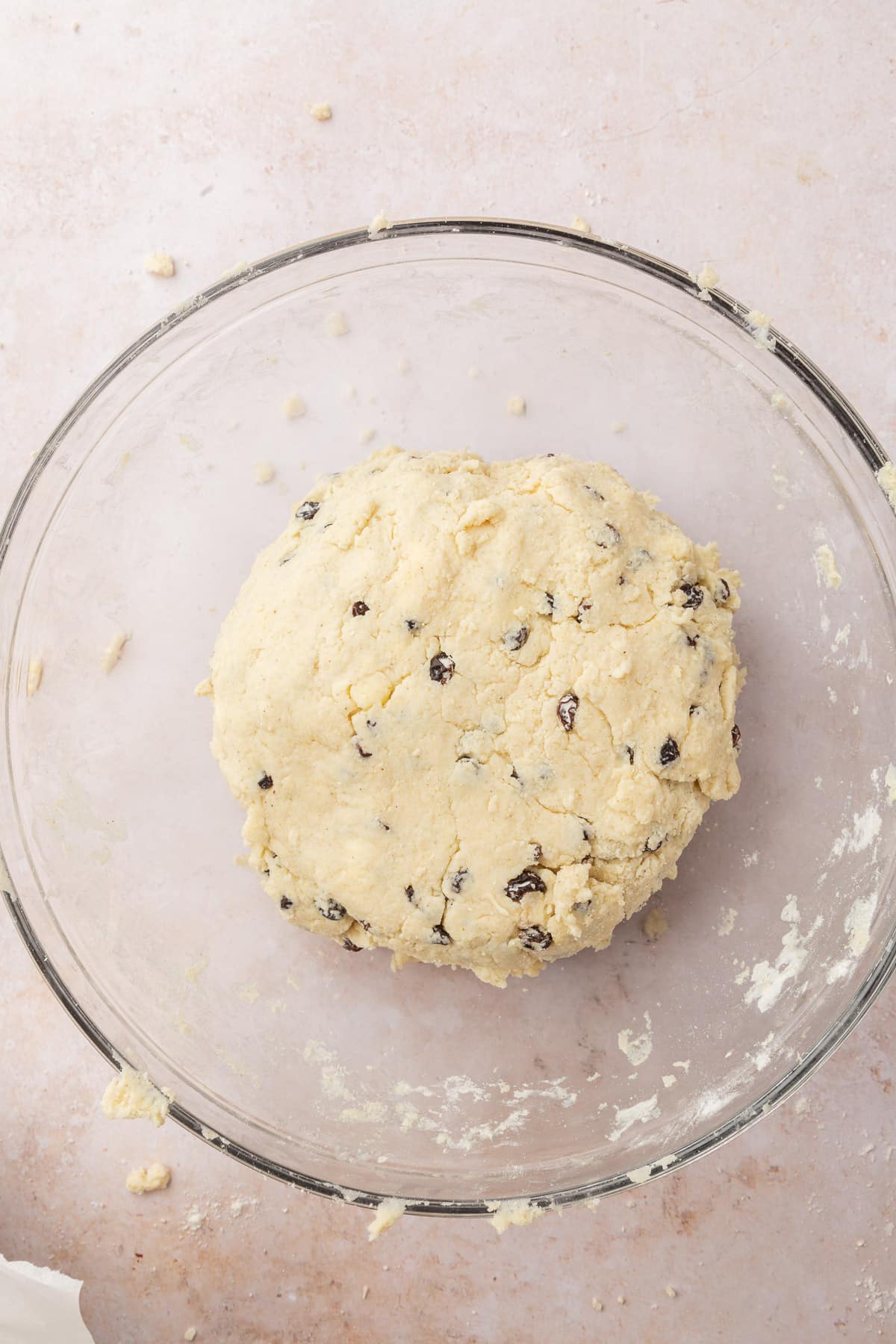
The less you handle this dough, the better. Mix it until it just comes together and shape it into a rough disk. It’s supposed to look scraggly. Overworking it will make the bread dense and tough instead of tender and light.
Step-by-Step Instructions
Paragraph saying how easy this is to make, just follow the steps and scroll down to the recipe card for more information, tips and tricks and the printable recipe.
For the ingredient list with measurements, full instructions, printable recipe, and additional notes, please scroll down to the recipe card.
Recipe FAQs
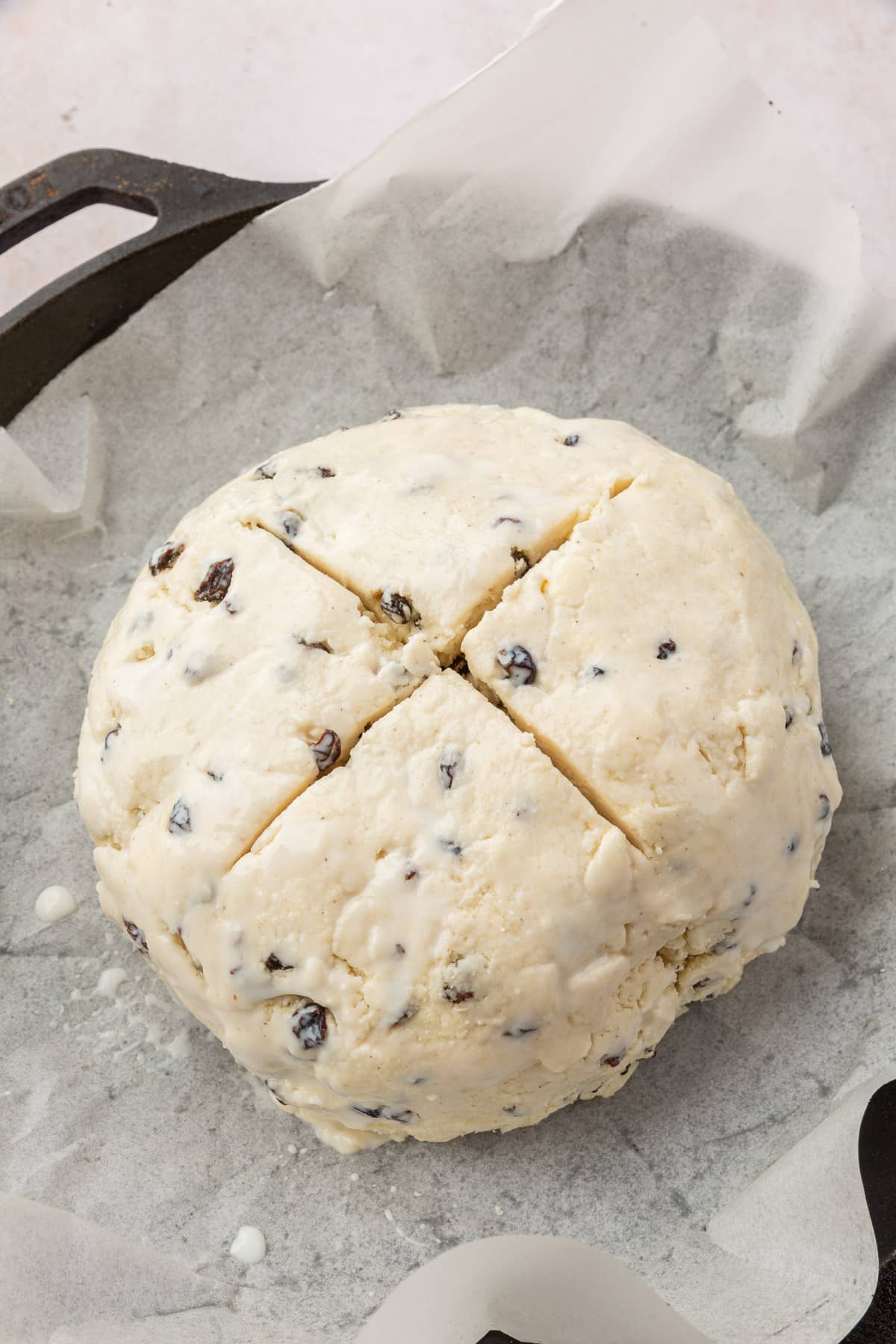
It helps the bread bake evenly so the center cooks through without overbaking the outside. Traditionally, it’s also said to “keep the devil out” and bless the bread.
Yes. The bread is just as good without them. For a savory version, fold in fresh herbs like dill or rosemary and some cracked black pepper instead.
Expert Tips
Storage Instructions
- Storage: Irish soda bread is really best within the first 48 hours of baking. Wrap leftovers in an airtight container and leave at room temperature.
- Freezer Option: I love to freeze leftover Irish soda bread. Slice the bread and place the slices on a baking sheet lined with parchment paper. Flash freeze for an hour. Once frozen solid, add to a freezer-safe container or bag and freeze for up to 3 months. You can place frozen slices directly in the toaster or leave them at room temperature for about an hour to defrost.
Serving Suggestions
I always serve this with a thick pat of Irish butter, but it pairs well with almost any soup or stew. Try it alongside my gluten-free beef stew, gluten-free broccoli cheddar soup, or gluten-free chicken noodle soup for a cozy meal. If you’re building a full St. Patrick’s Day spread, add my gluten-free shepherd’s pie to the table. Leftover slices are great toasted the next morning with jam or honey.
More gluten-free St. Patrick’s Day recipes: Slow Cooker Corned Beef / Leftover Corned Beef Hash / Potato Nachos
Gluten-Free Irish Soda Bread
Ingredients
- 3 cups (420 g) gluten-free flour blend - Bob's Red Mill 1-to-1 Gluten-Free Baking Flour
- 2 tablespoons (25 g) granulated sugar
- ¾ teaspoon kosher salt
- 2 teaspoons baking powder
- 1 teaspoon baking soda
- 4 tablespoons (56 g) butter - cold and cubed
- ¾ cup (113 g) dried currants or golden raisins
- 1 ¼ cup (300 g) buttermilk - plus up to ¼ cup more if needed
- 1 (50 g) large egg
- 1 tablespoon (15 g) buttermilk - for brushing on top
**Use the toggle button above to turn the instruction photos on and off!
Instructions
- Preheat the oven to 400°F. Line an 8-10 inch cast iron skillet with parchment paper.
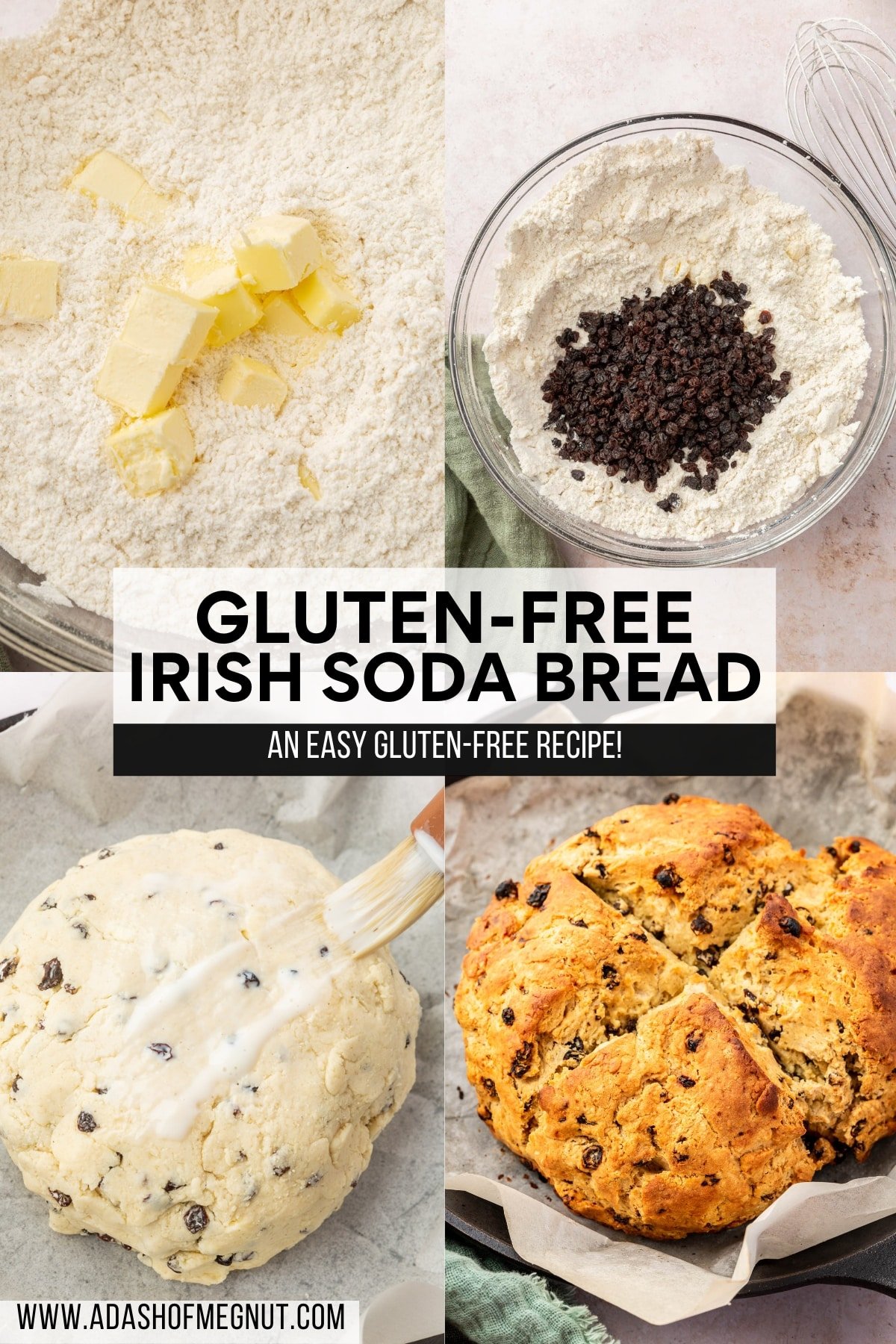
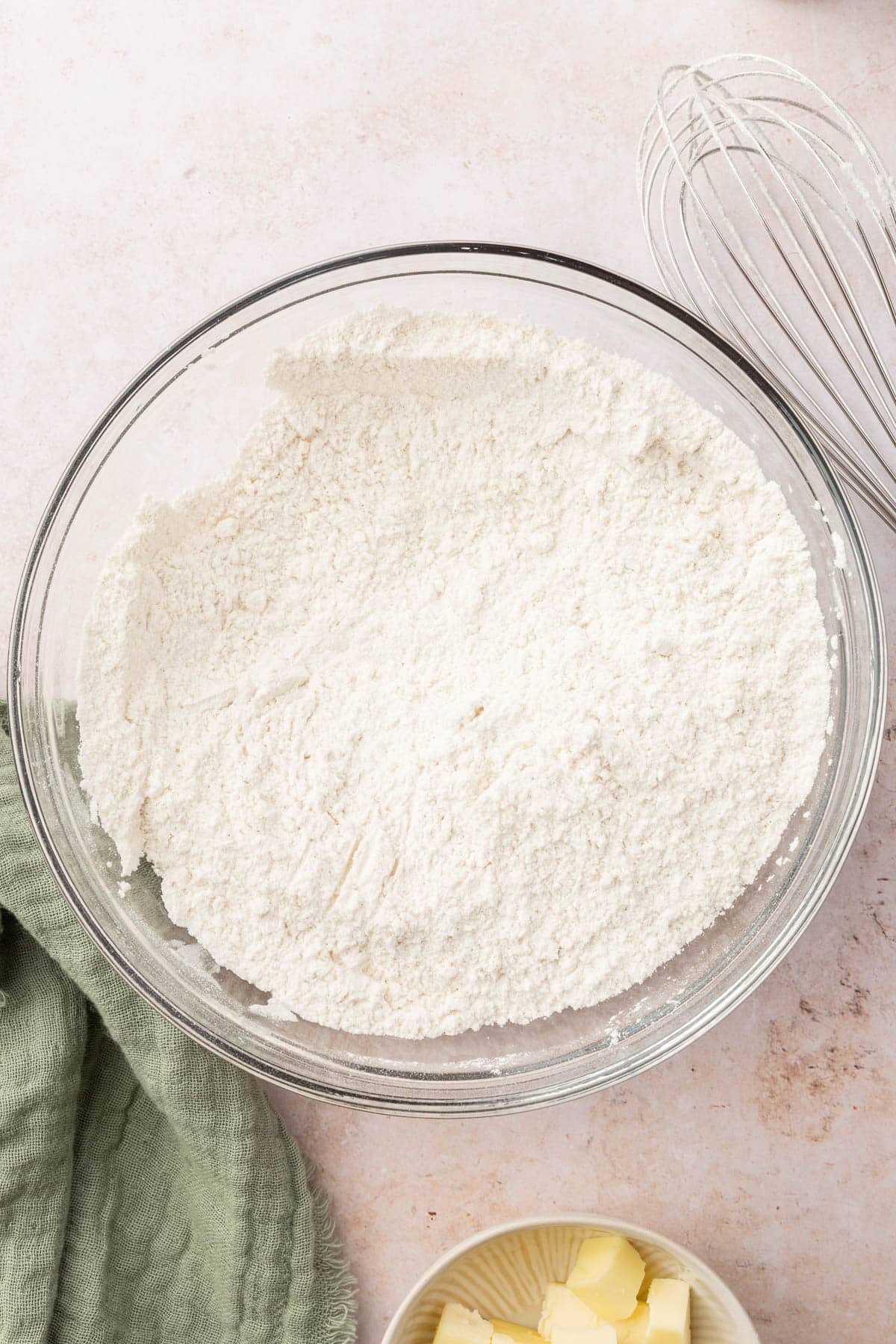
- In a large bowl, whisk together 3 cups (420 g) gluten-free flour blend, 2 tablespoons (25 g) granulated sugar, ¾ teaspoon kosher salt, 2 teaspoons baking powder, and 1 teaspoon baking soda.
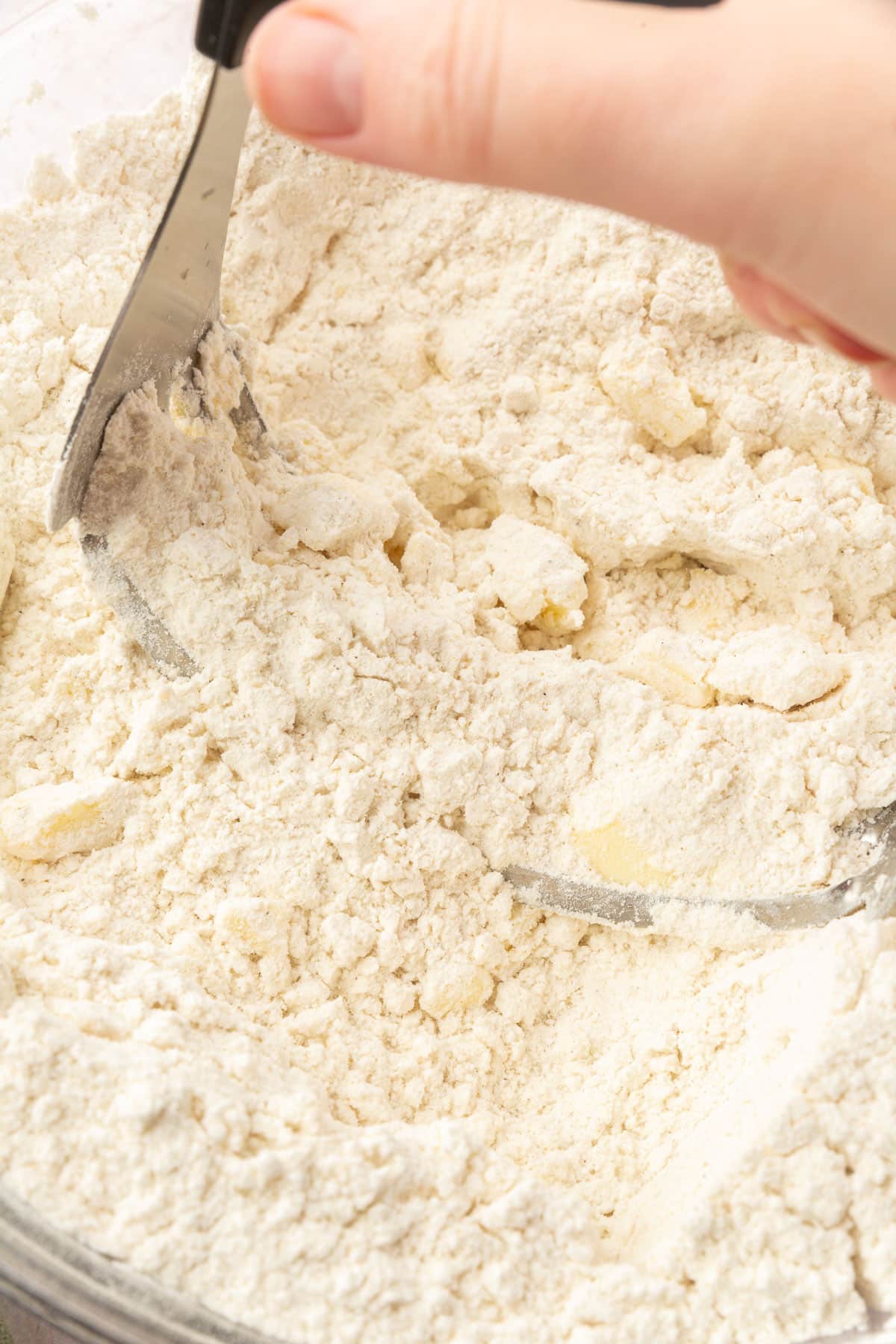
- Add the cold cubed 4 tablespoons (56 g) butter and cut into the flour using a pastry cutter or two knives until the pieces are about the size of peas.
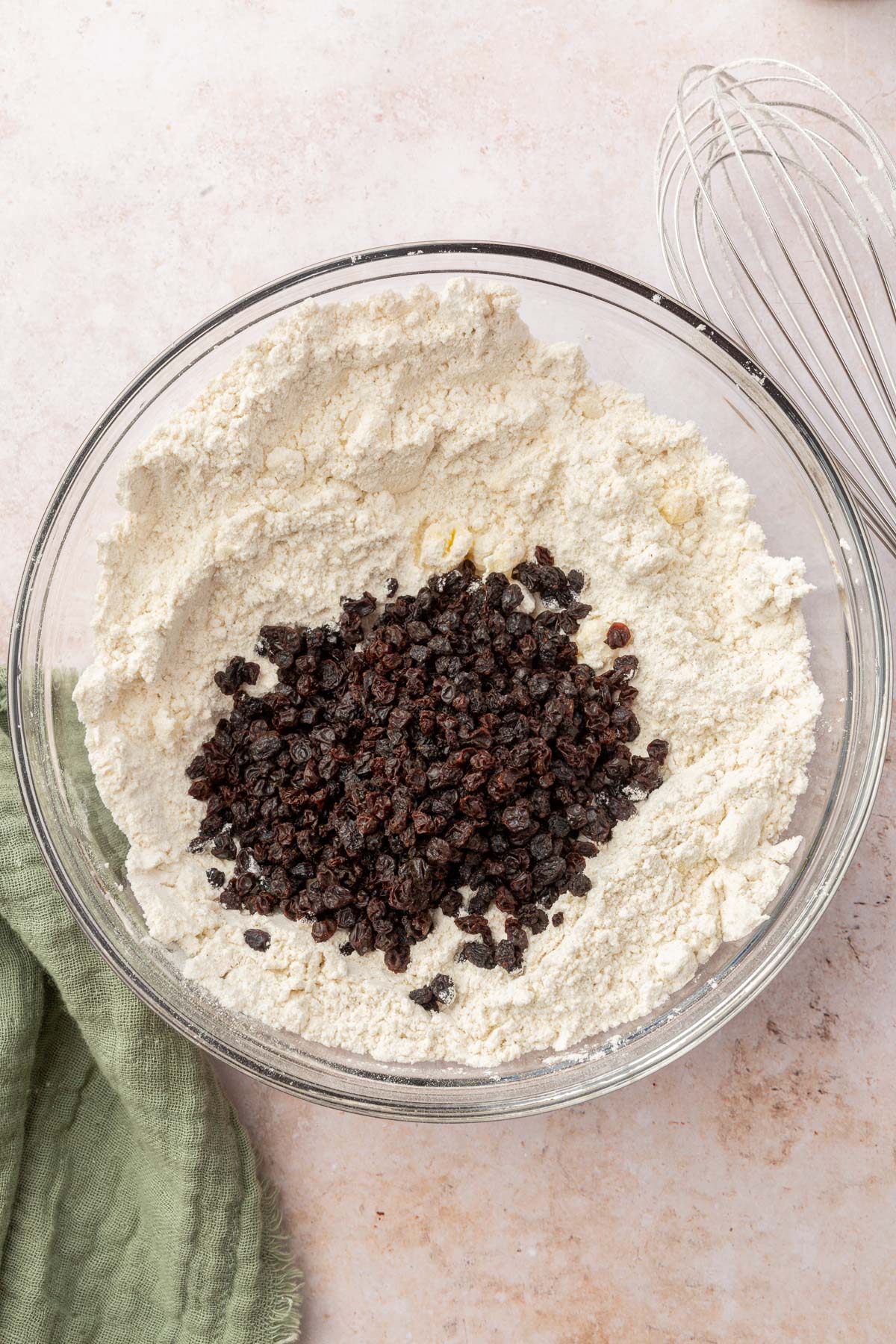
- Stir in ¾ cup (113 g) dried currants or golden raisins until evenly distributed.
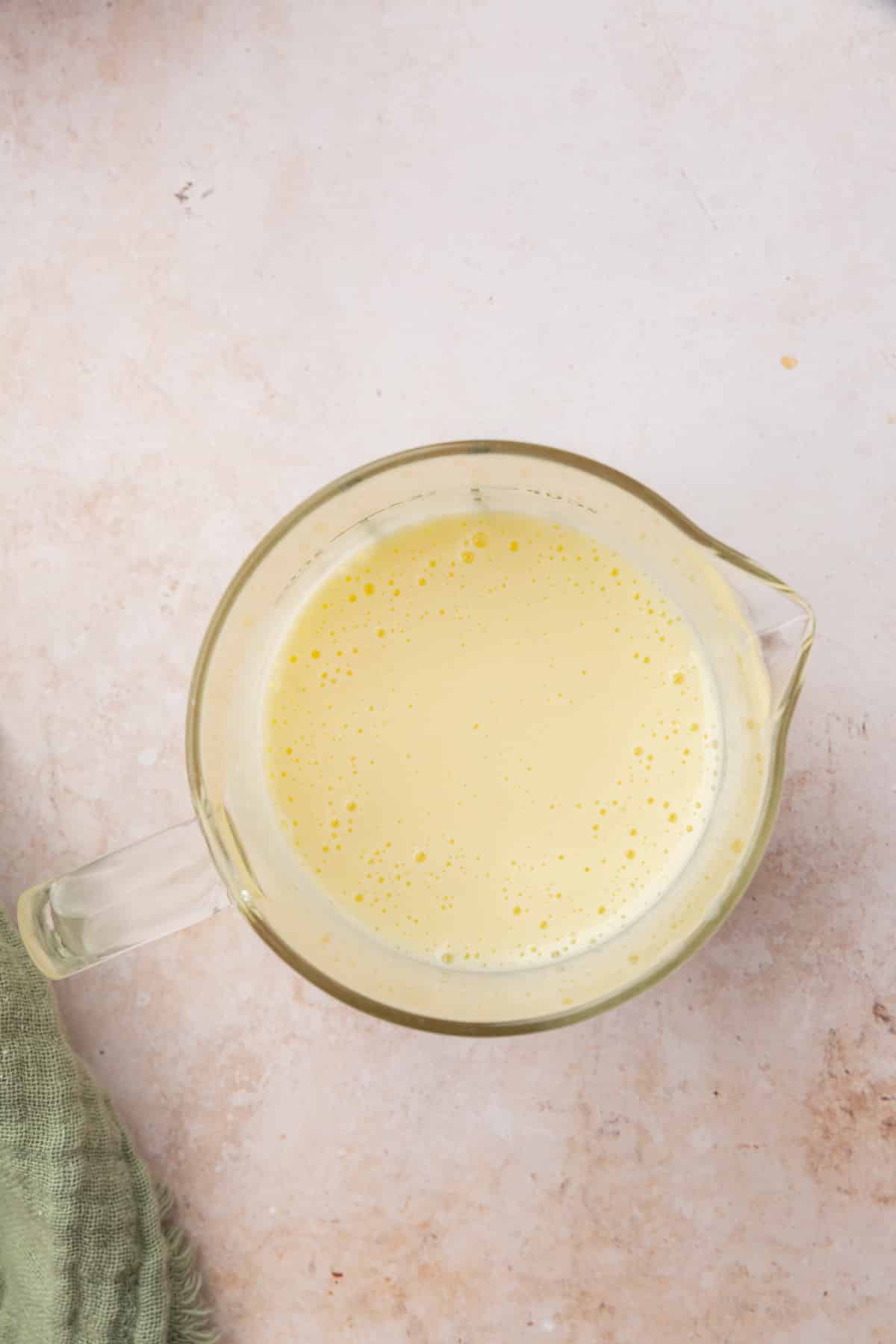
- In a separate bowl, whisk together 1 ¼ cup (300 g) buttermilk and 1 (50 g) large egg until smooth.
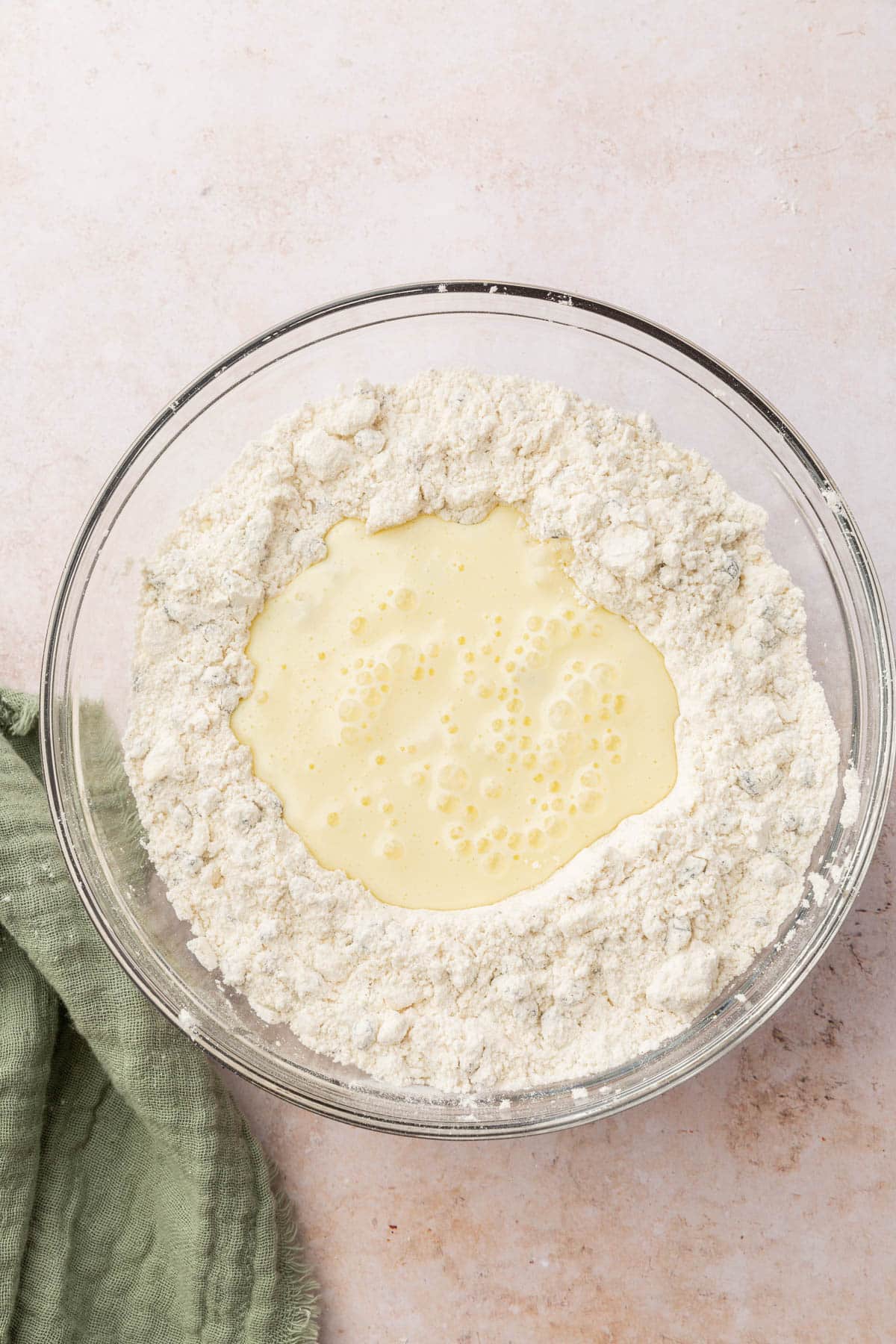
- Make a well in the center of the dry ingredients and pour in the buttermilk mixture.
- Mix with a spatula until the dough just comes together. If it's too dry, add more buttermilk a tablespoon at a time, up to an additional 1/4 cup.
- Form the dough into a disk about 6 inches in diameter. It should look rough and scraggly, not smooth.
- Transfer to the prepared skillet. Brush the top with 1 tablespoon (15 g) buttermilk.
- Use a sharp knife to cut a deep cross into the top of the dough, about halfway through.
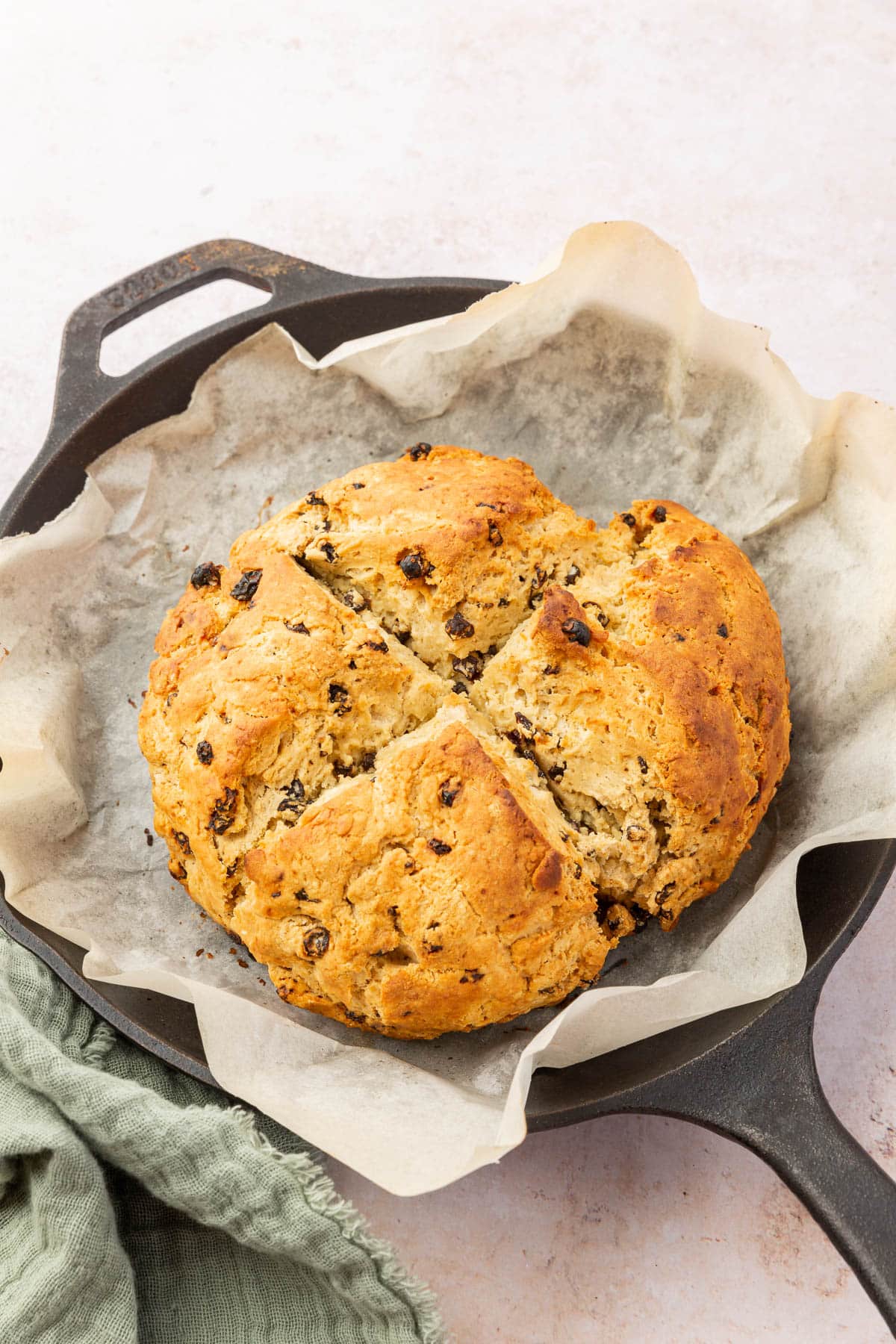
- Bake at 400°F for 30-40 minutes, until golden brown and a toothpick inserted in the center comes out clean.
- Cool for 10 minutes in the skillet, then transfer to a wire rack to cool completely before slicing.
Notes
- Buttermilk. Start with 1 ¼ cups. If the dough is too dry to hold together, add more a tablespoon at a time, up to an additional ¼ cup. Do not exceed 1 ½ cups total or the bread will be dense.
- Flour. I used Bob’s Red Mill 1-to-1 Gluten-Free Baking Flour, which contains xanthan gum. I haven’t tested other blends so can’t verify they will work.
- Weigh your flour. Scooping can vary drastically. A food scale gives the most consistent results. I include gram weights for this reason.
- Celiac note. If you have celiac disease or are on a gluten-free diet, double check that all ingredients are gluten-free, as manufacturing practices can change.

i am too scared to make bread! this looks amazing though!
This bread should work really well in Brown Bread Ice-Cream–the one I use has oats in it, too!
Thanks for sharing this! I’ve been triyng bread for a while, but can never get it quite right so I give up and try a month or two later. I’ve decided part of my problem (not all of it…yesterday I forgot the salt!) is my pans so I want to find some nice bread pans. I like yours! So can I ask where you got them and how much they were? 🙂
Hi Keona, for this recipe I actually didn’t use bread pans. I just put it in a baking sheet so that it would look more rustic. However, when I do use bread pans, I got one from my mom’s kitchen that’s very old and that’s my favorite. The other one I got from Marshall’s for under $10. I wish I knew where my mom got her bread pan that I like so much though! Bread tends to bake up better in that pan for some reason!
Thanks for posting this recipe!! It’s an excellent bread I’ve been making since 1973 – when I found Myrtle Allen’s recipe in Beard On Bread. Beard’s version doesn’t have any white flour and more salt(too much salt really). I sometimes use honey instead of molasses if that’s what I have on hand.
I’m glad more people will be able to try this recipe!
Thanks Rajesh!
Just made this recipe with a few modifications. Because I have salted butter, I omitted a half teaspoon of salt in the recipe. I used Costco GF flour, and I baked it for 45 minutes, taking it out with a 190 degree internal temperature. Worked just fine.
I need to omit the Buttermilk since I’m lactose intolerant! Any suggestions?
Hi Linda, You can use unsweetened almond milk or cashew milk mixed with 1 tablespoon of apple cider vinegar. Let that mixture sit for about 5 minutes before using. Hope this helps!
Thank you so much for this recipe! I made it last night and it was delicious!! It was super easy to make!
Thanks, Marilyn! I’m so glad you enjoyed it and I appreciate you so much for coming back to review it!