
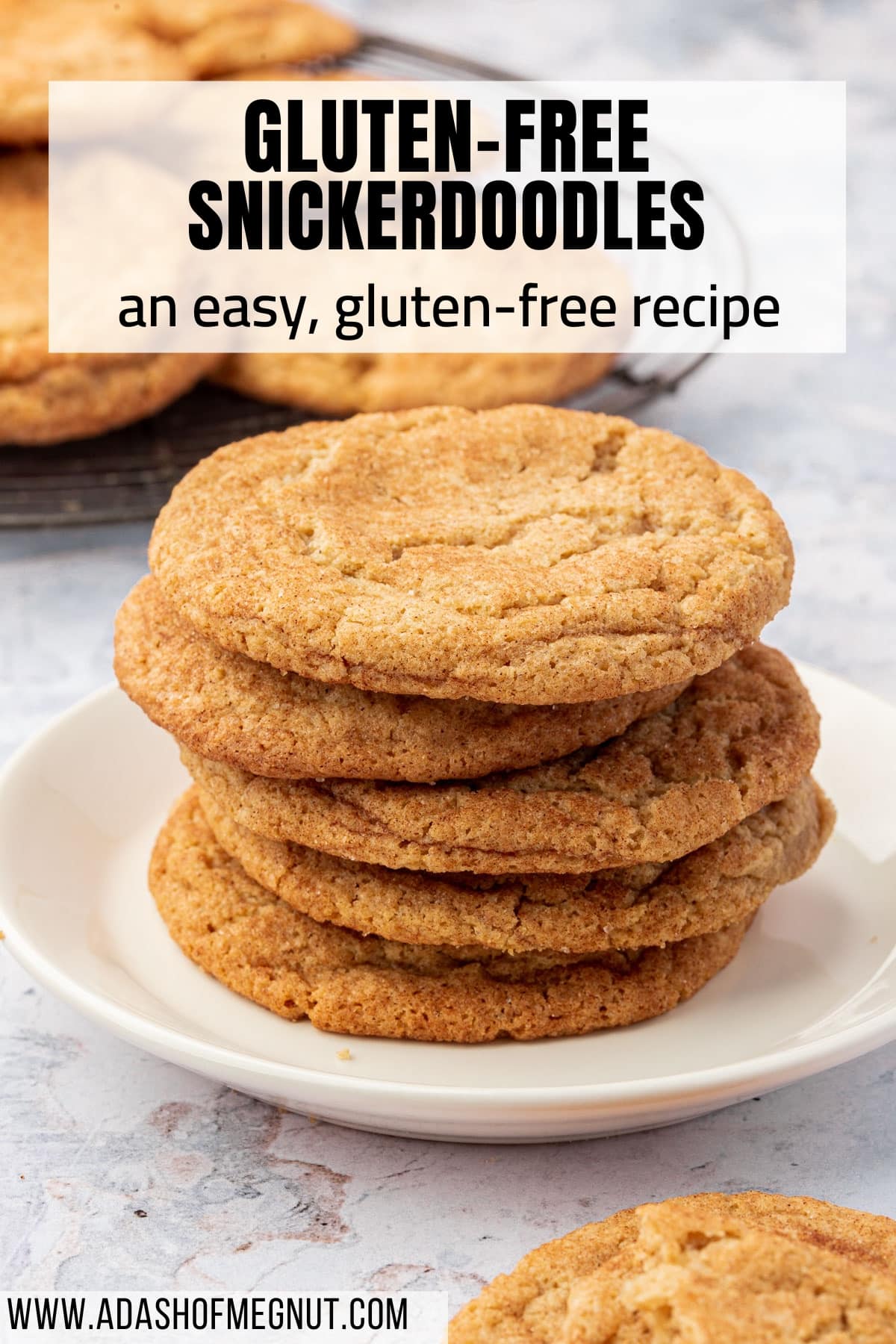
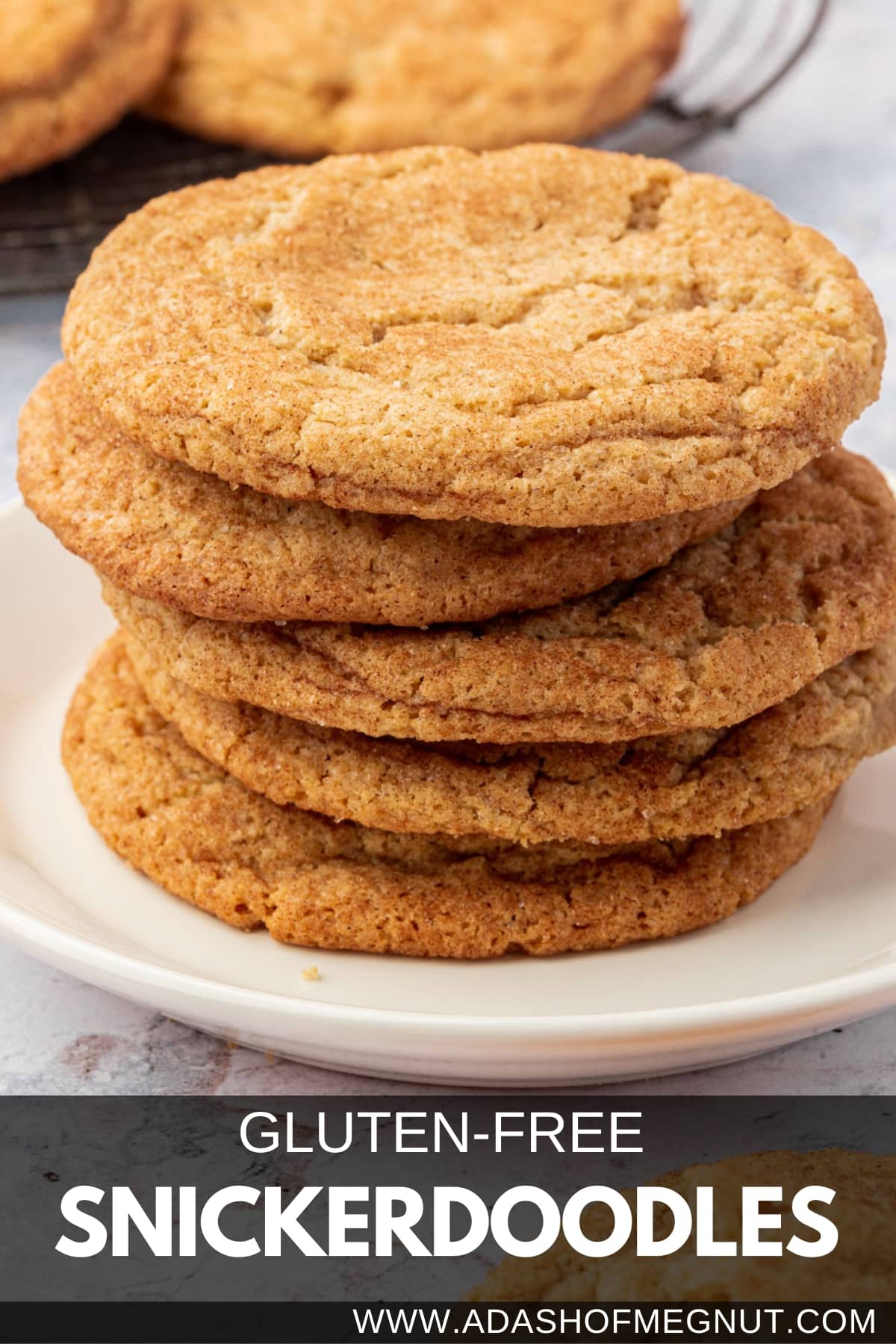
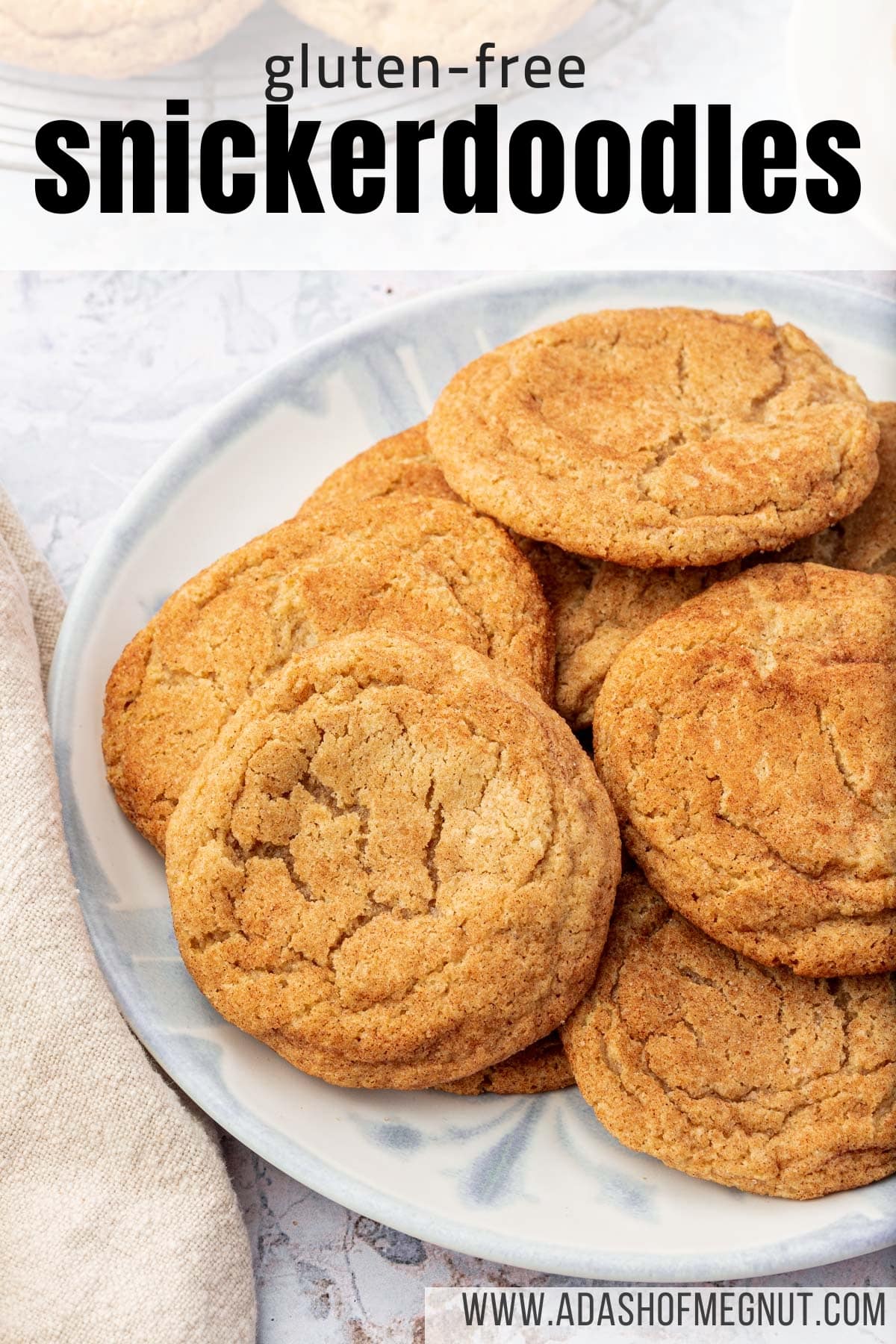
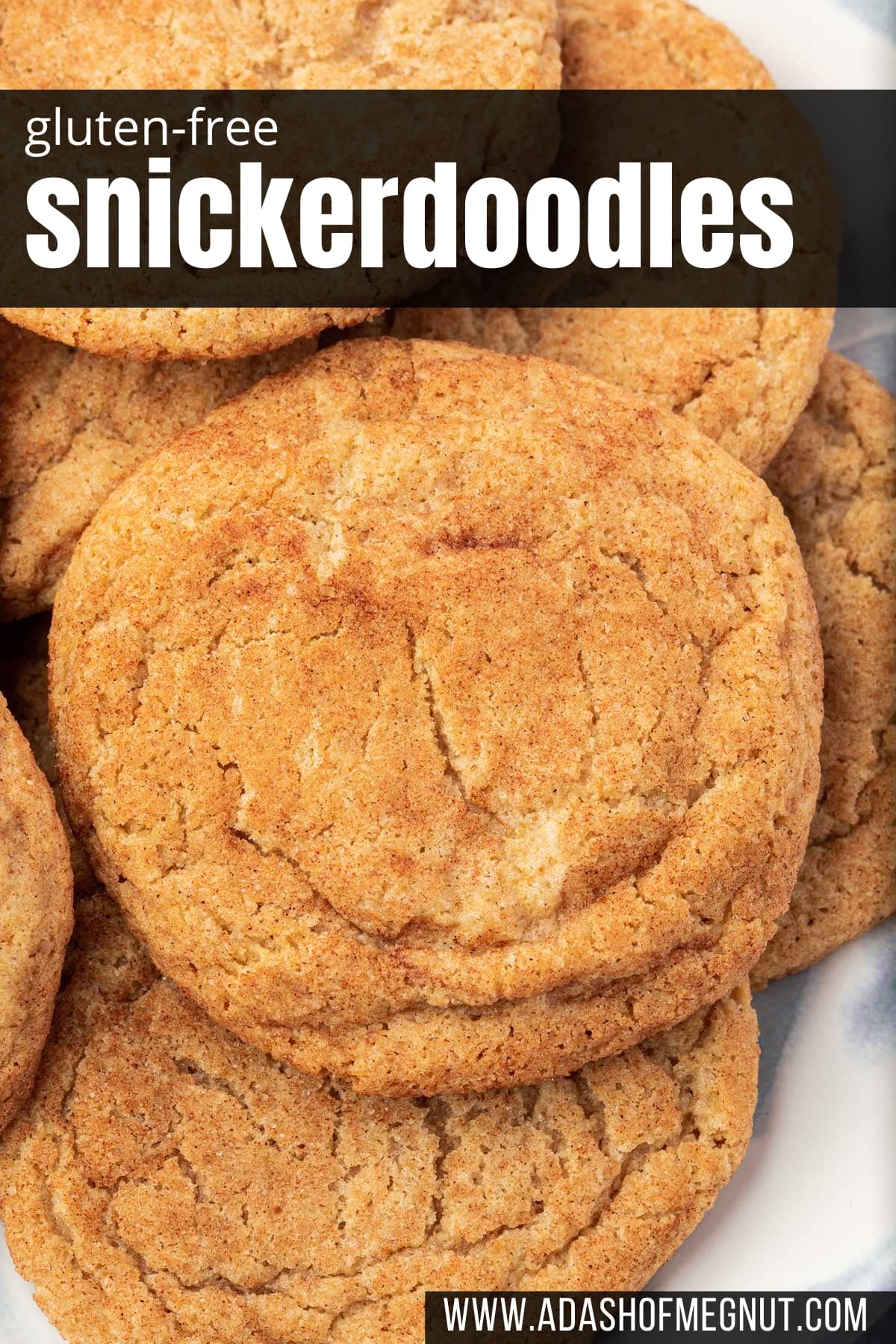
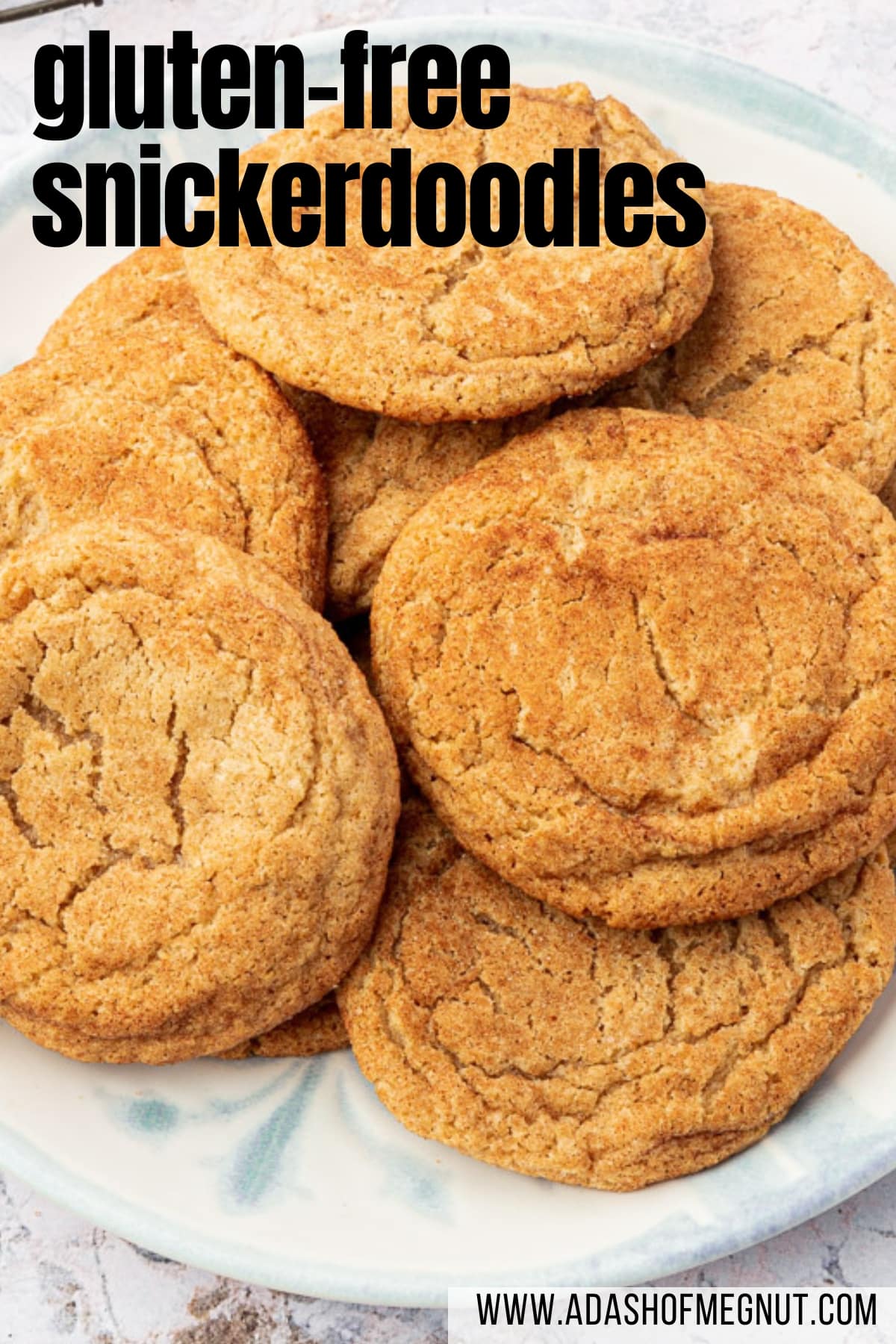
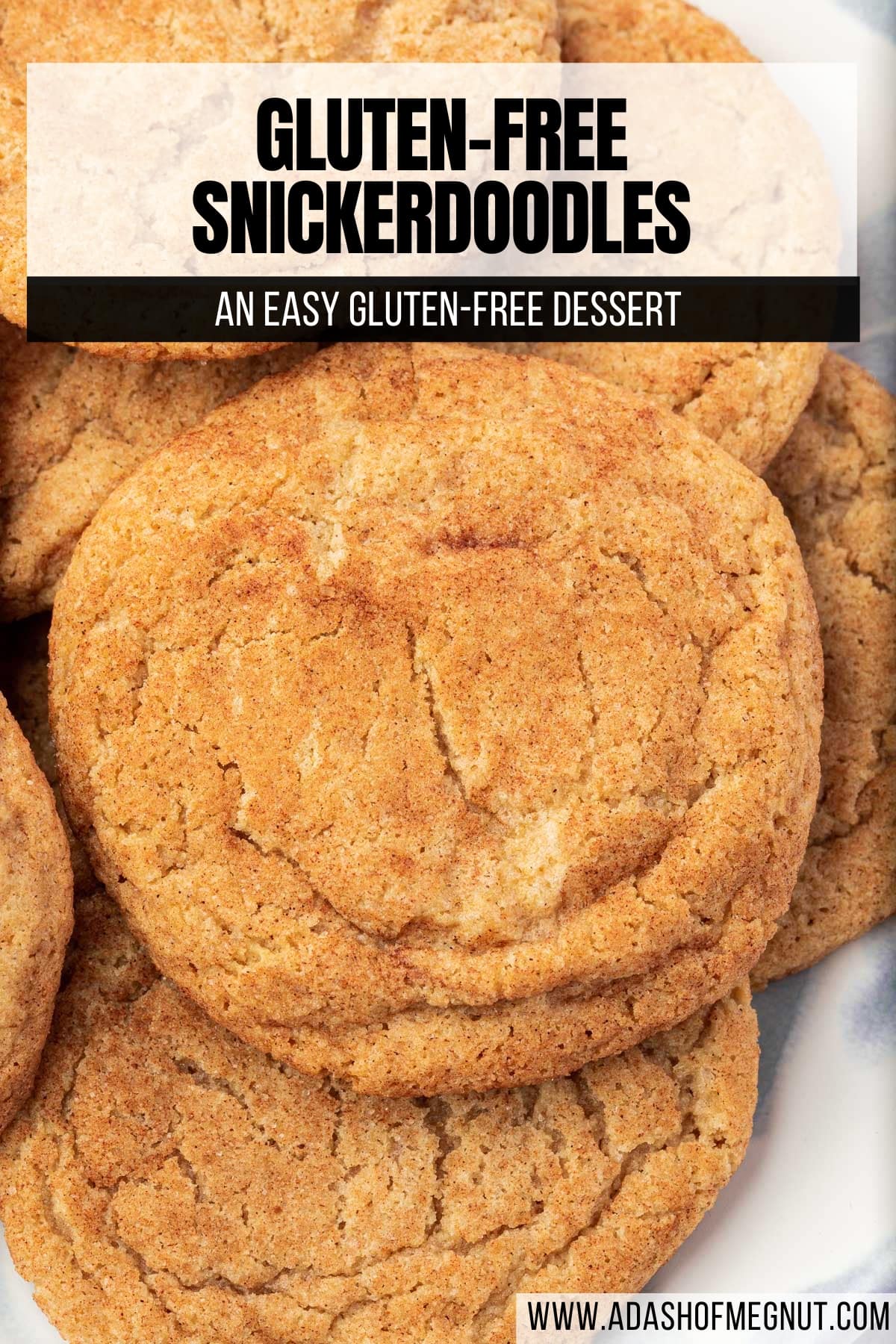
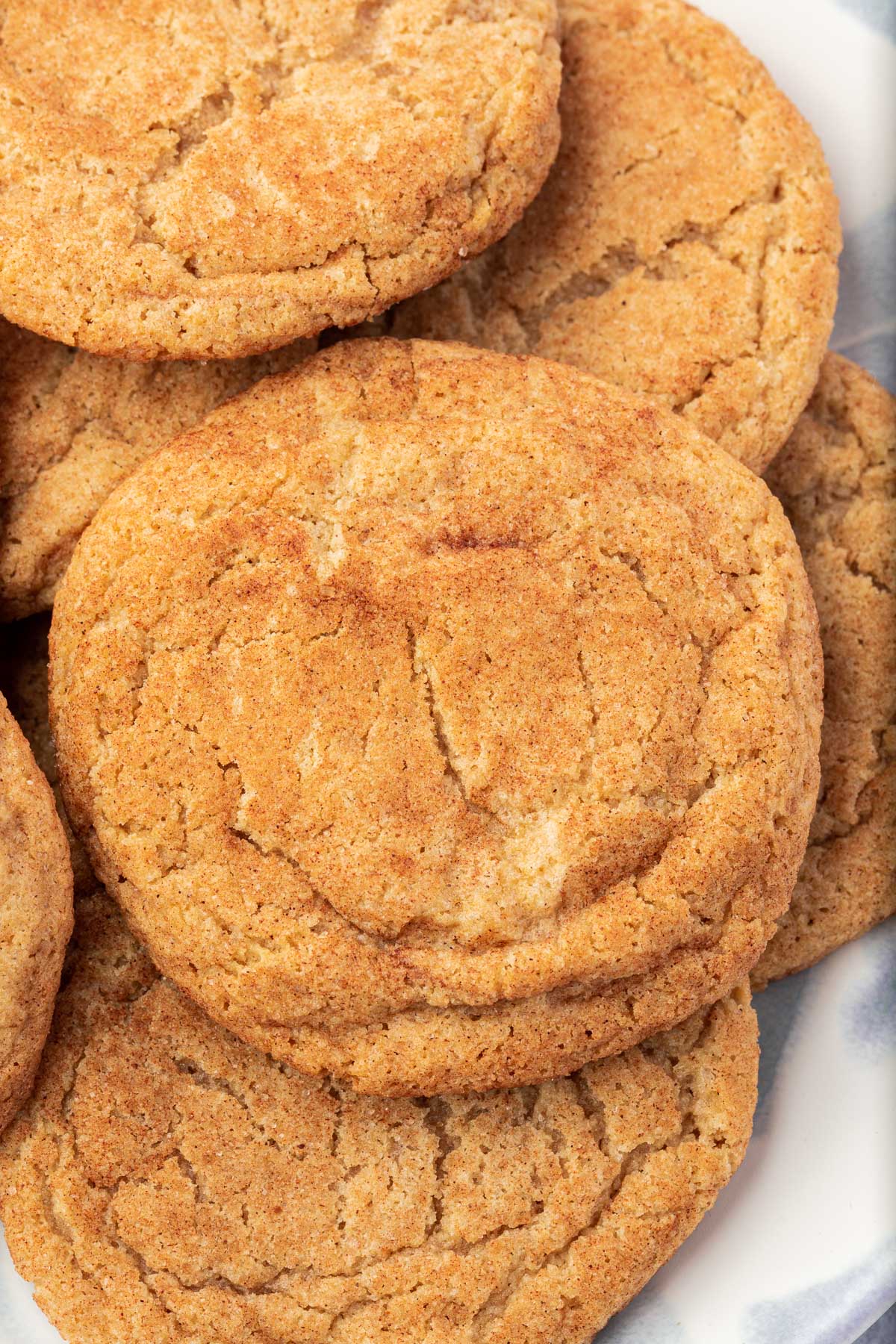
Gluten-free snickerdoodles were one of the most popular cookies I made when I ran Lush Bites, my gluten-free cookie subscription box. Every month I shipped cookie varieties all over the US from a commercial kitchen, and the snickerdoodle was always one of the most requested flavors.
The dough comes together quickly but does need 30 minutes in the fridge before baking. That rest time is worth it. It hydrates the gluten-free flour, helps the cookies hold their shape, and gives you that chewy center with crispy edges instead of a flat, dense cookie.
Why You’ll Love This Recipe
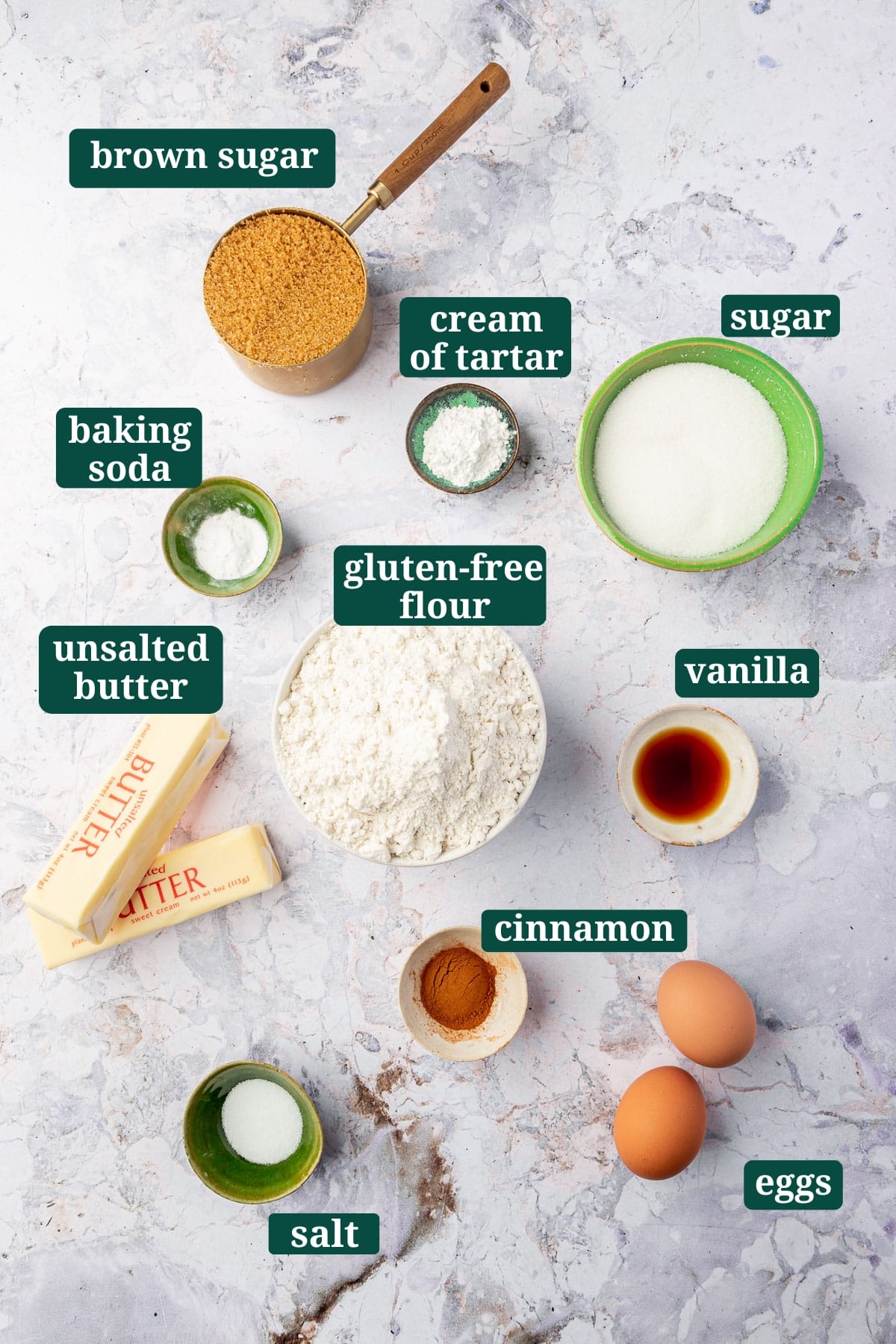
Ingredient Notes
- Gluten-Free Flour Blend – I tested this recipe with Bob’s Red Mill 1-to-1 Gluten-Free Baking Flour and King Arthur Measure for Measure. Both already contain xanthan gum and are meant to be a 1-to-1 swap with all-purpose flour. I can’t guarantee results with other blends as I haven’t tested them.
- Cream of Tartar – This is what separates a snickerdoodle from a plain cinnamon sugar cookie. It reacts with the baking soda to give the cookies lift, and its acidity is what creates that signature tangy flavor and chewy texture. If you leave it out, you’ll still get a good cookie, but it won’t taste like a snickerdoodle.
- Unsalted Butter – Make sure it’s softened to room temperature. When you press it with a finger it should make a dent easily. Butter that’s too soft will make the cookies spread and turn greasy.
- Brown Sugar – The combination of brown and granulated sugar is what gives these cookies their chewy center. Don’t swap it out for all white sugar.
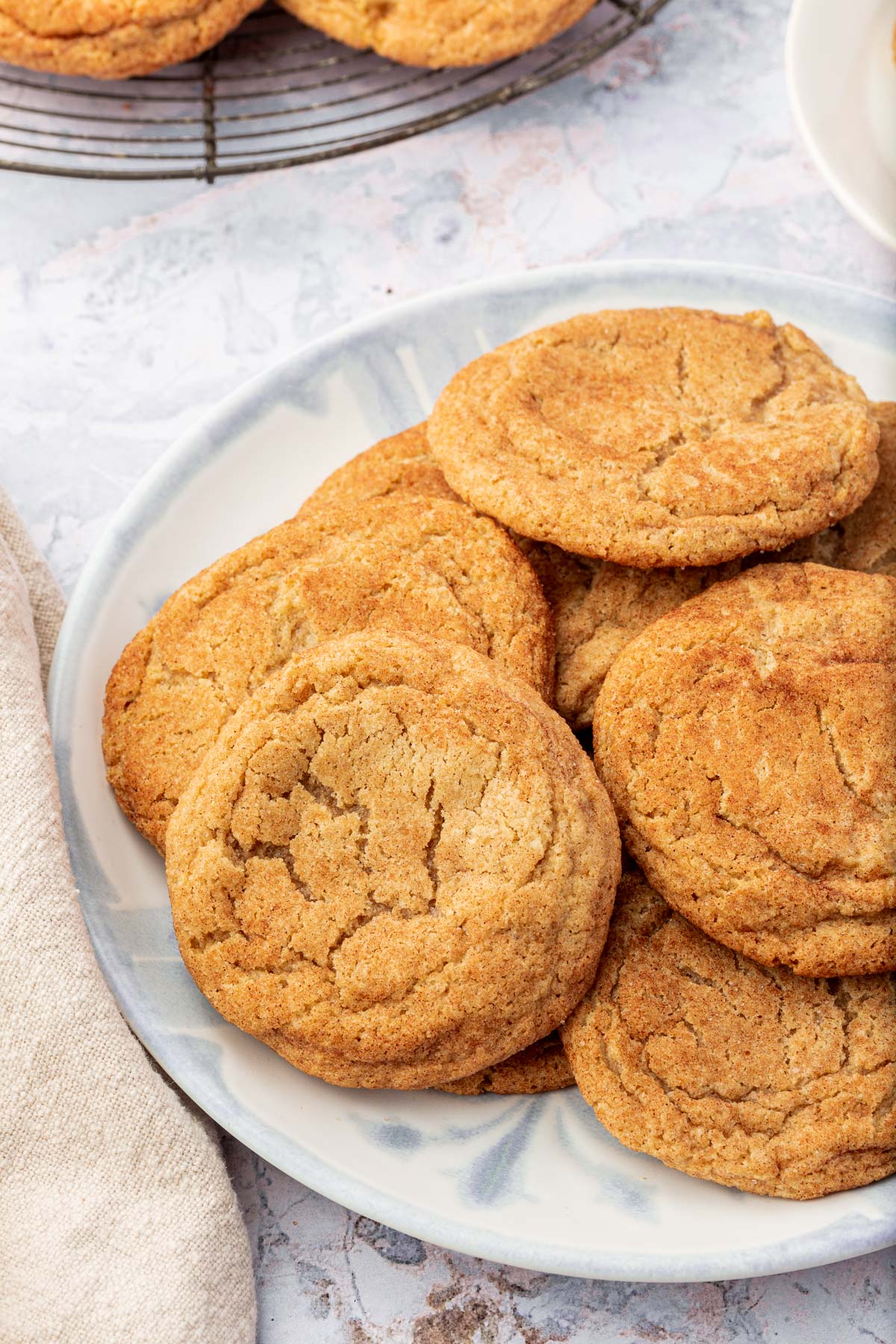
- Baking Soda – Gives the cookies lift so they puff up and then fall slightly as they cool, creating those signature cracks on top.
Use a Food Scale for Best Results
Gluten-free flour is especially sensitive to how it’s measured. Too much flour makes the cookies dense and dry, too little and they’ll spread flat. A food scale takes the guesswork out completely. If you don’t have one, spoon the flour into your measuring cup and level it off with a flat edge. Never scoop directly from the bag.
Step-by-Step Instructions
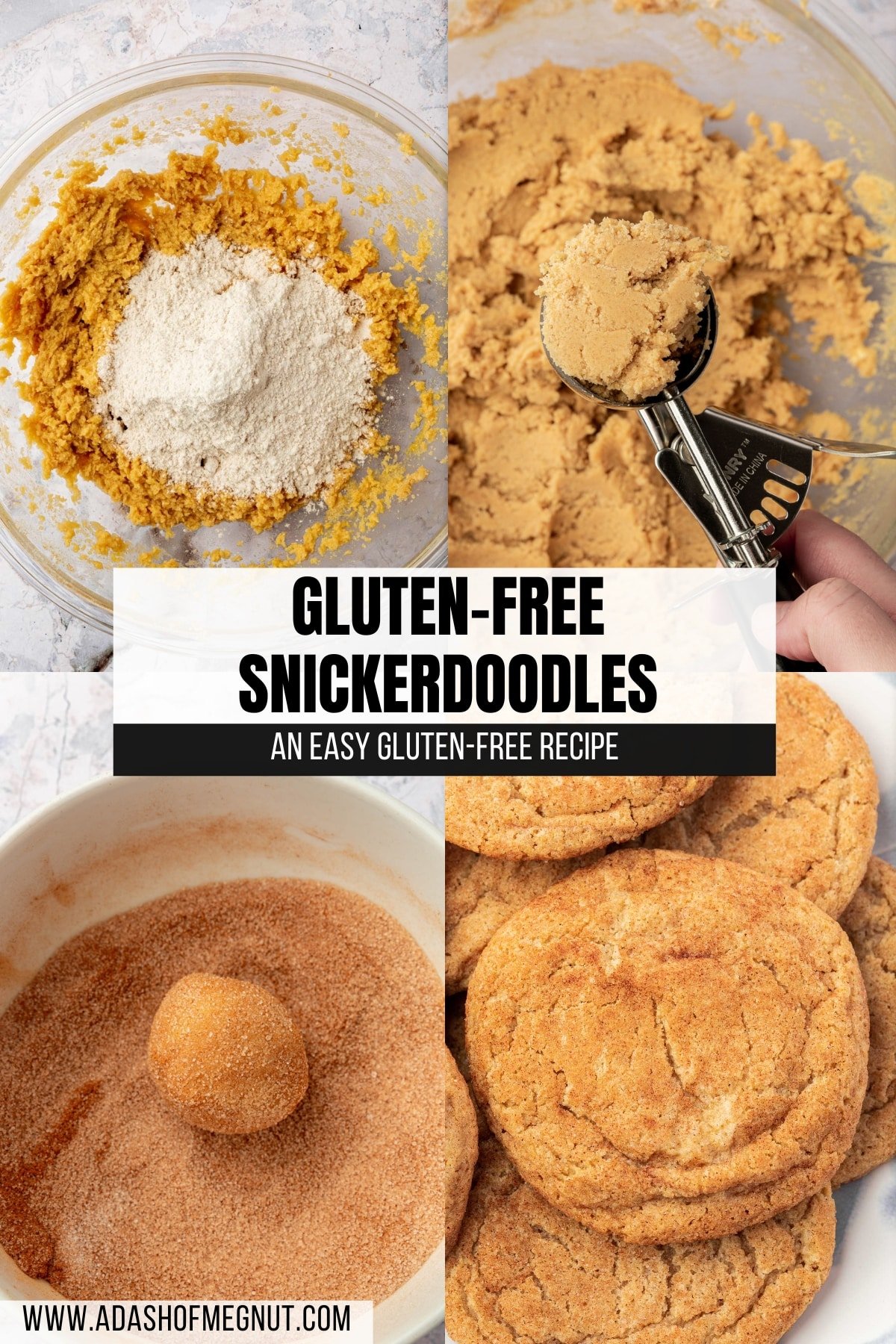
These are the best gluten-free snickerdoodles. They’re so easy to make and will make your kitchen smell amazing!The below steps and matching photos are meant to help you see the recipe at various stages to help you make these gluten-free cookies perfectly every time.
For the ingredient list with measurements, full instructions, printable recipe, and additional notes, please scroll down to the recipe card.
Recipe FAQs
Most likely your baking soda is old. To test it, add ½ teaspoon to a bowl with a tablespoon of vinegar. If it bubbles up immediately, it’s still good. If nothing happens, it’s time for a new box.
Yes. Swap the butter for a 50/50 mix of vegetable shortening and dairy-free butter. The texture will be slightly different but they’ll still hold together well.
Expert Tips
Storage Instructions
Room Temperature: Store in an airtight container for up to 4 days. If the cookies start to firm up, microwave one for about 10 seconds to soften it back up.
Freezer: Freeze baked cookies in a single layer on a sheet pan until solid, then transfer to a freezer-safe bag for up to 3 months. Thaw at room temperature for about an hour or microwave for 30 seconds.
Make Ahead: Roll the dough into balls and freeze on a sheet pan until solid, then transfer to a freezer-safe bag for up to 3 months. Bake straight from frozen and add 1 to 2 minutes to the bake time.
Serving Suggestions
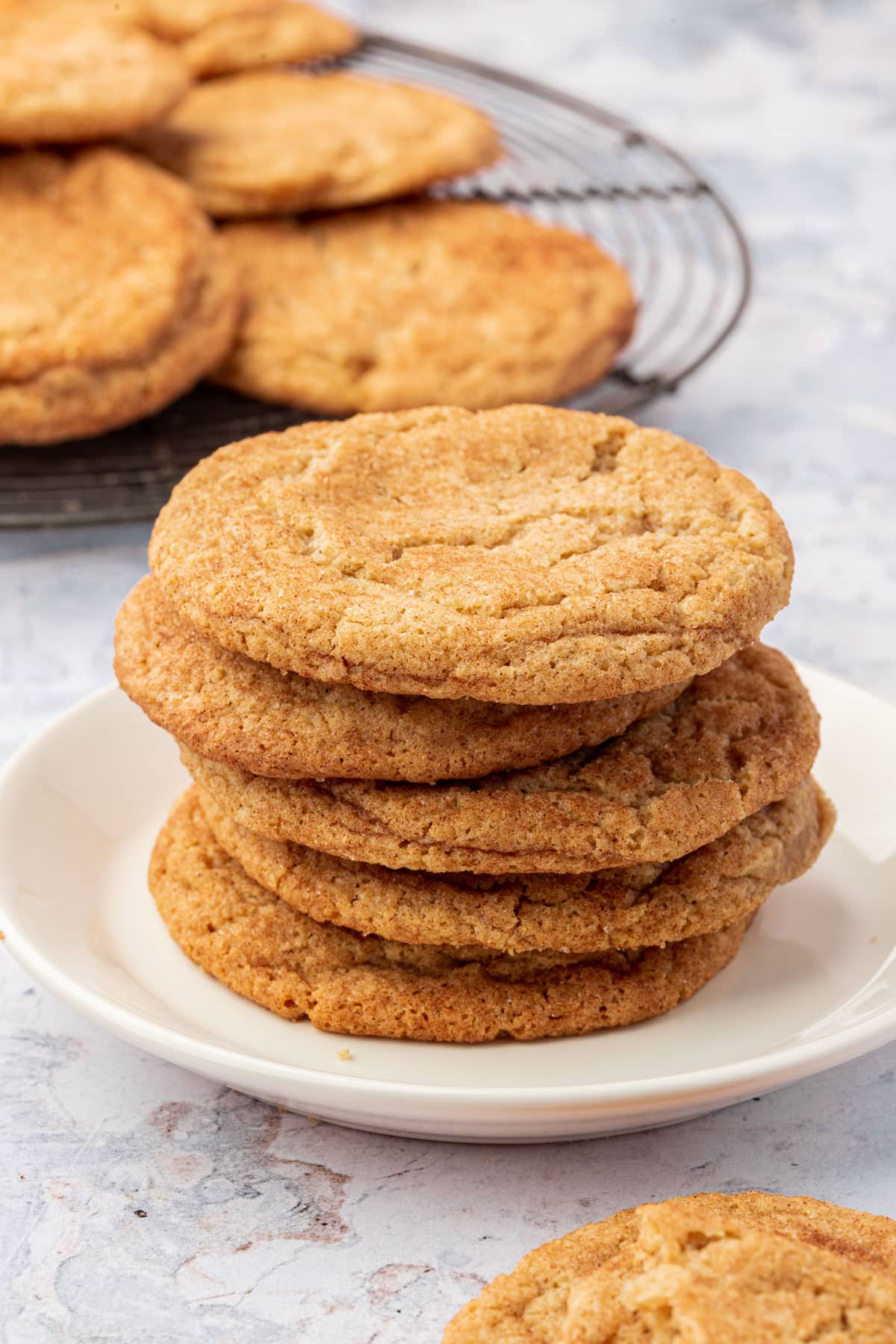
Gluten-free snickerdoodles are good on their own but they really shine as part of a cookie spread. They pair well with my gluten-free chocolate chip cookies and gluten-free peanut butter cookies for a classic cookie box or holiday platter. If you want to add something with a different flavor profile, my gluten-free thin mints are a great contrast to the cinnamon sugar and hold up well in a cookie box. During the fall, I like to pair these with my gluten-free pumpkin cookies, too!
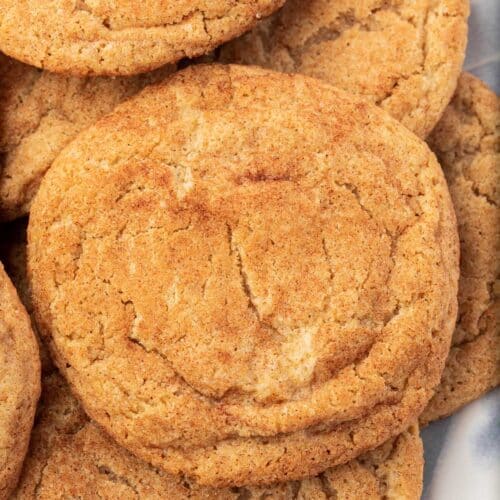
Gluten-Free Snickerdoodles
Ingredients
For the snickerdoodle cookie dough:
- 2¾ cups (385 g) gluten-free flour blend - 385g
- 2 teaspoons (6 g) cream of tartar
- 1 teaspoon (4 g) baking soda
- 1 teaspoon (6 g) salt
- 1 teaspoon (2 g) ground cinnamon
- 1 cup (227 g) unsalted butter - softened to room temperature
- 1 cup (220 g) brown sugar - packed
- ¾ cup (150 g) granulated sugar
- 2 (100 g) large eggs
- 2 teaspoons (8 g) vanilla extract
For the cinnamon sugar coating:
- ¼ cup (50 g) granulated sugar
- 1 tablespoon (8 g) ground cinnamon
**Use the toggle button above to turn the instruction photos on and off!
Instructions
- Preheat the oven to 375°F. Line two baking sheets with parchment paper and set aside.
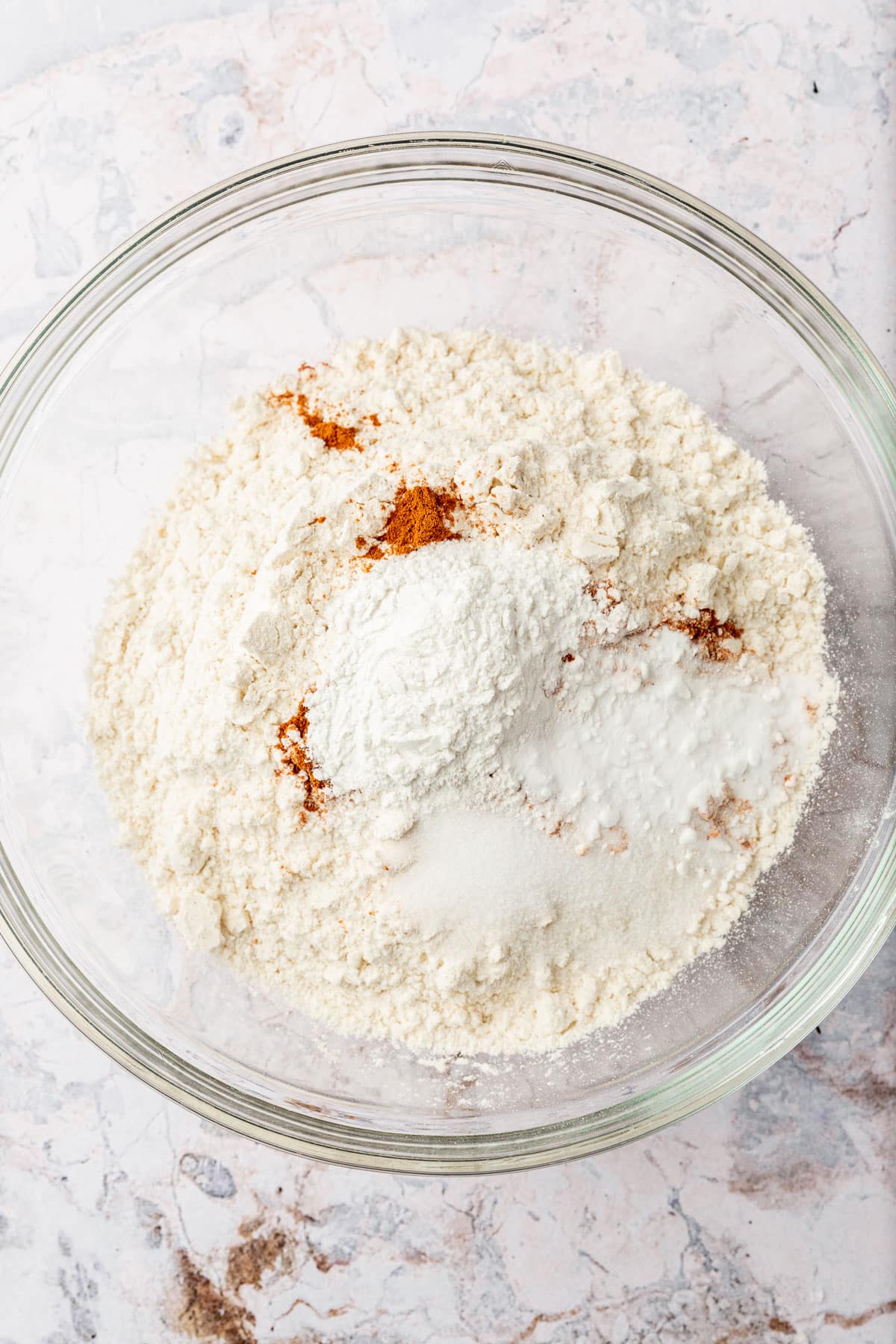
- In a medium bowl, whisk together 2¾ cups (385 g) gluten-free flour blend, 2 teaspoons (6 g) cream of tartar, 1 teaspoon (4 g) baking soda, 1 teaspoon (6 g) salt, and 1 teaspoon (2 g) ground cinnamon. Set aside.
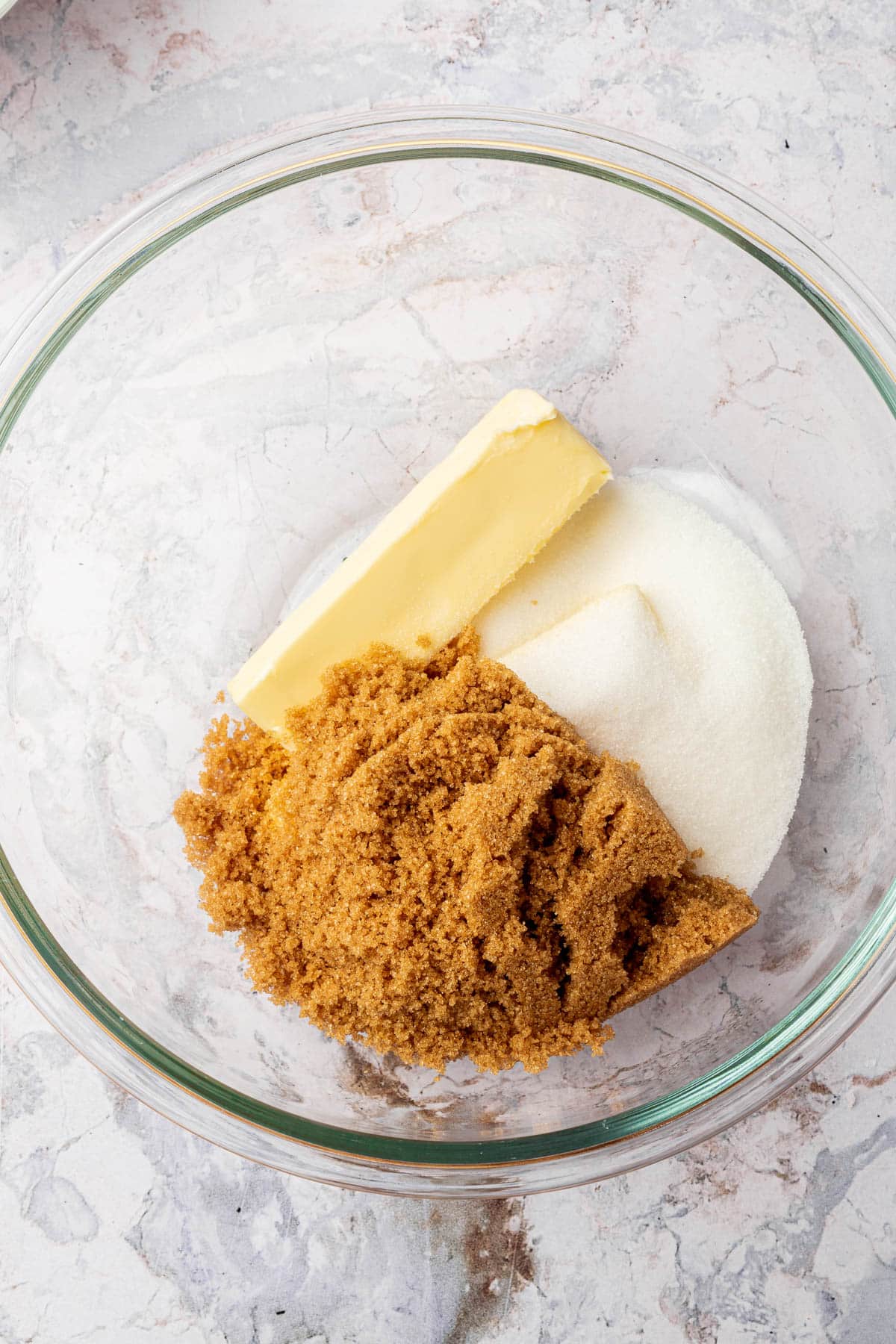
- In a large bowl, cream 1 cup (227 g) unsalted butter, 1 cup (220 g) brown sugar, and ¾ cup (150 g) granulated sugar together with an electric mixer for 2 to 3 minutes, until light and fluffy.
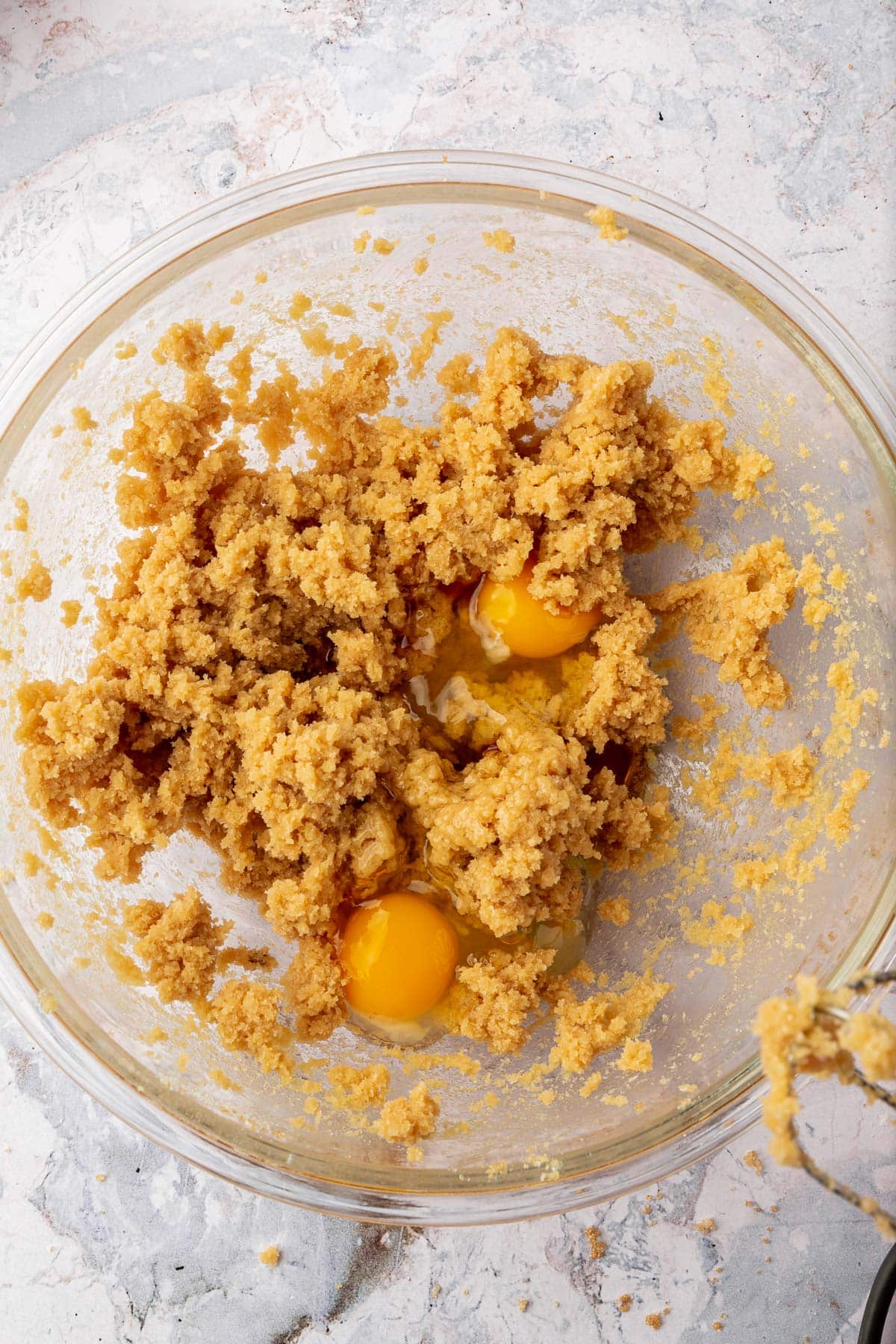
- Add 2 (100 g) large eggs and 2 teaspoons (8 g) vanilla extract. Mix until smooth, scraping down the sides of the bowl as needed.
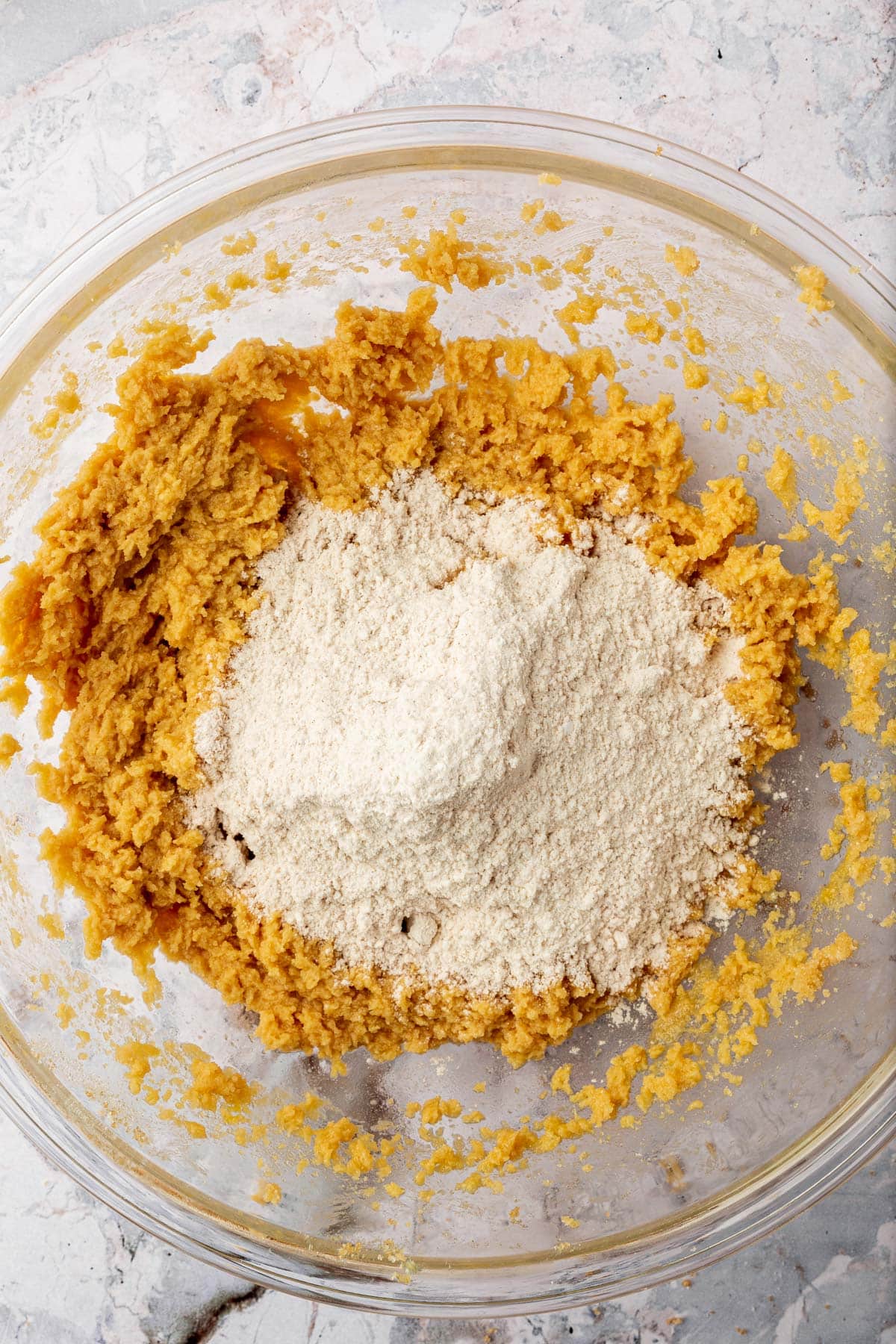
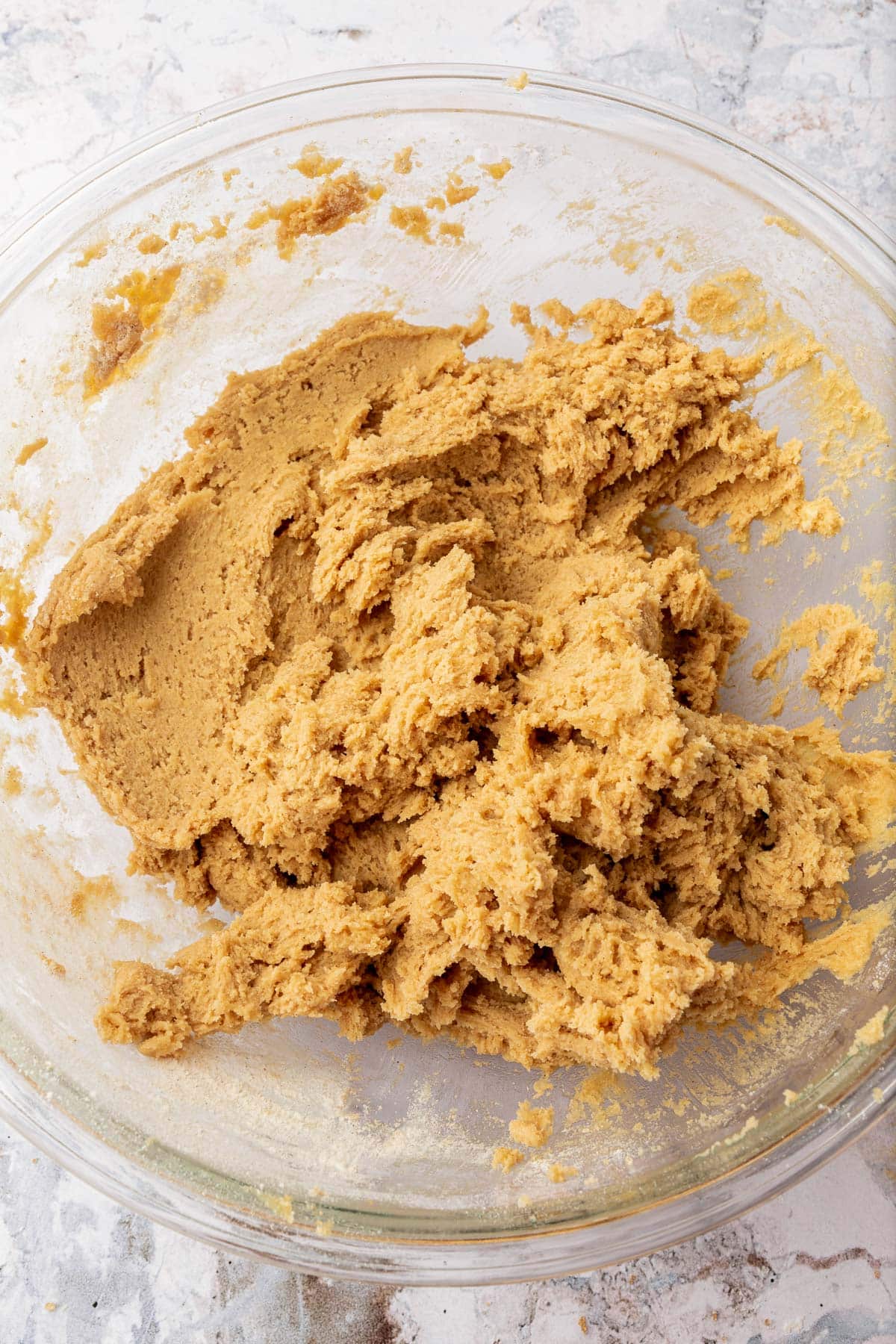
- Gradually add the dry ingredients to the wet ingredients, stirring between each addition, until no streaks of flour remain.
- Cover the dough and refrigerate for 30 minutes.
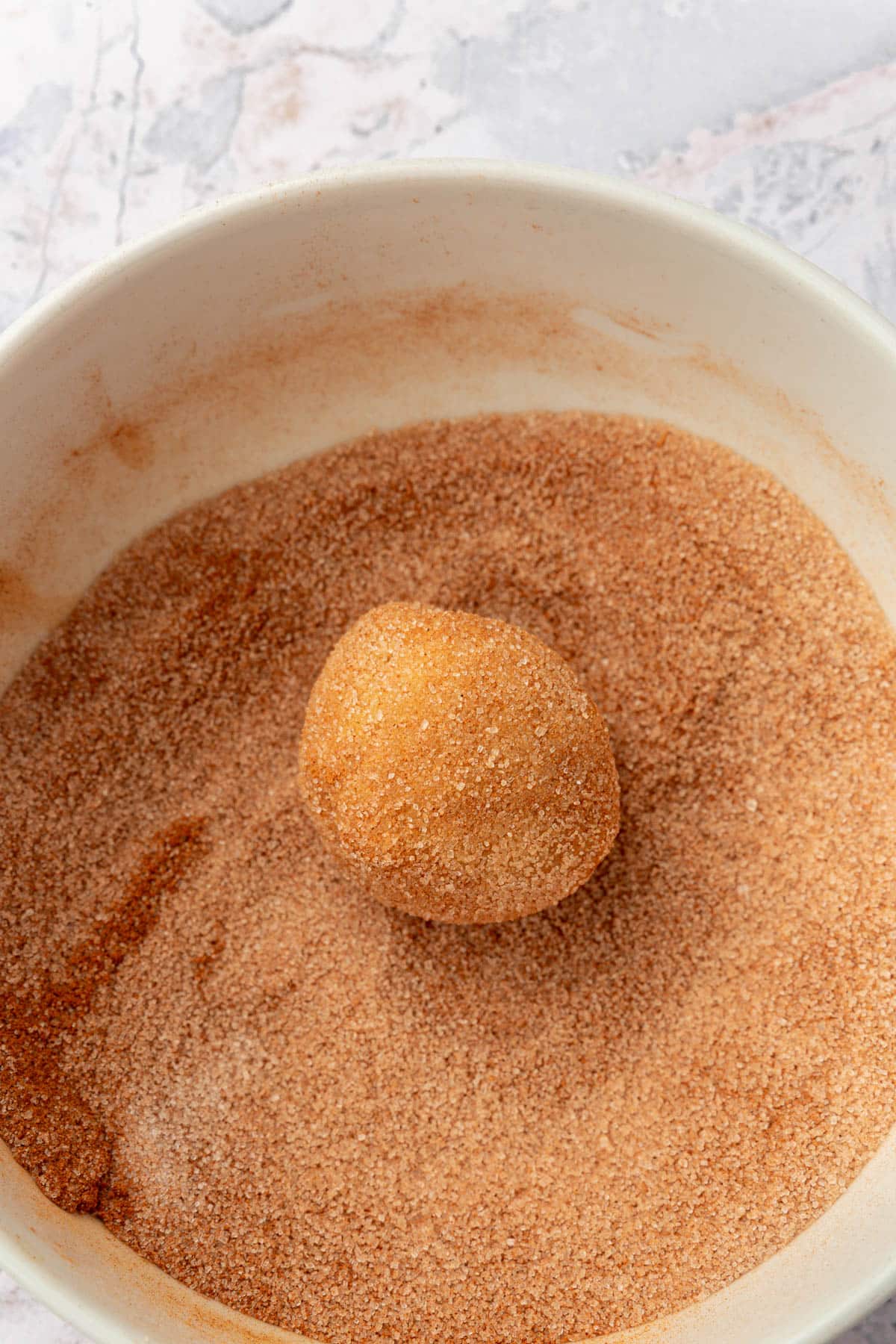
- In a small bowl, combine ¼ cup (50 g) granulated sugar and 1 tablespoon (8 g) ground cinnamon for the coating.
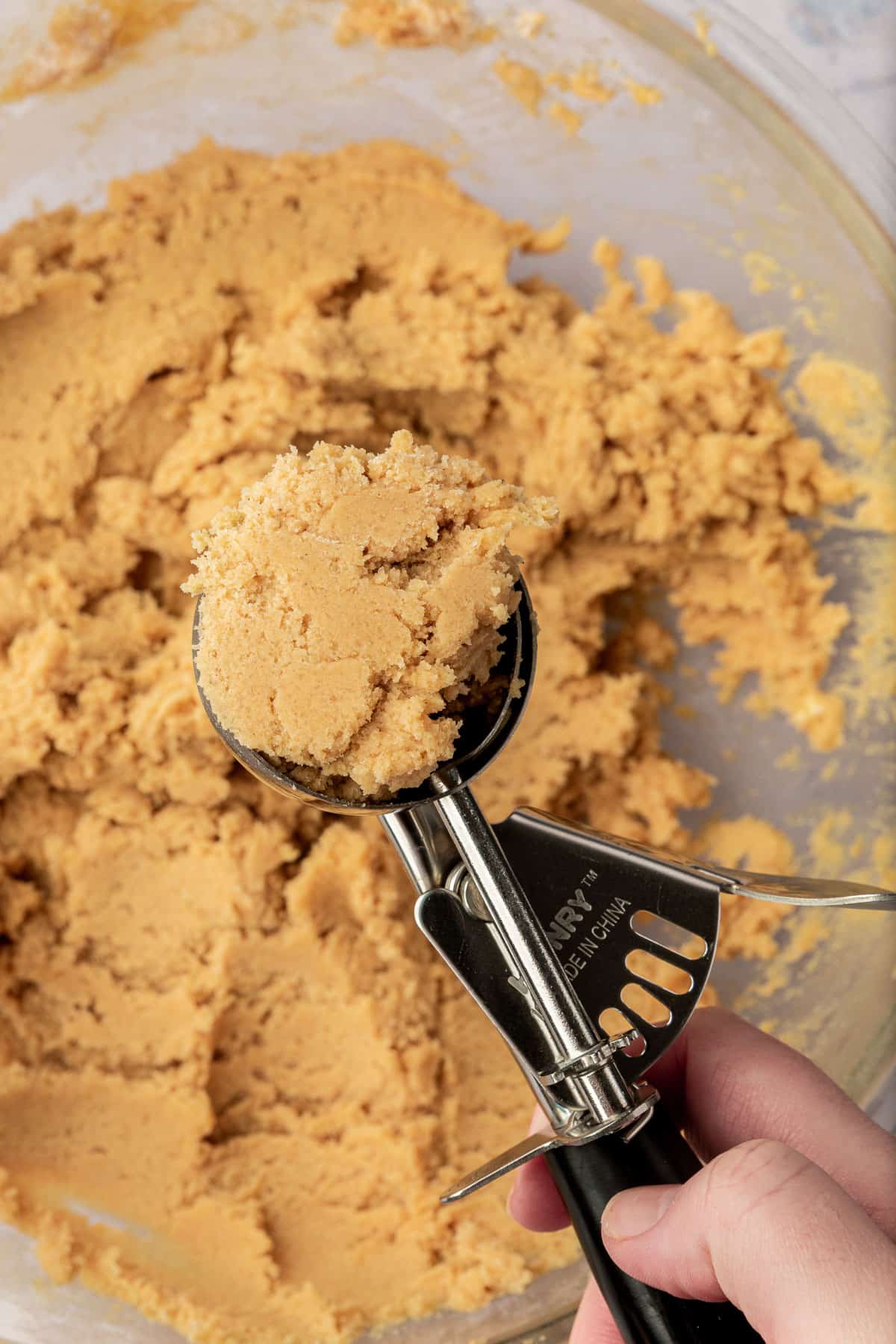
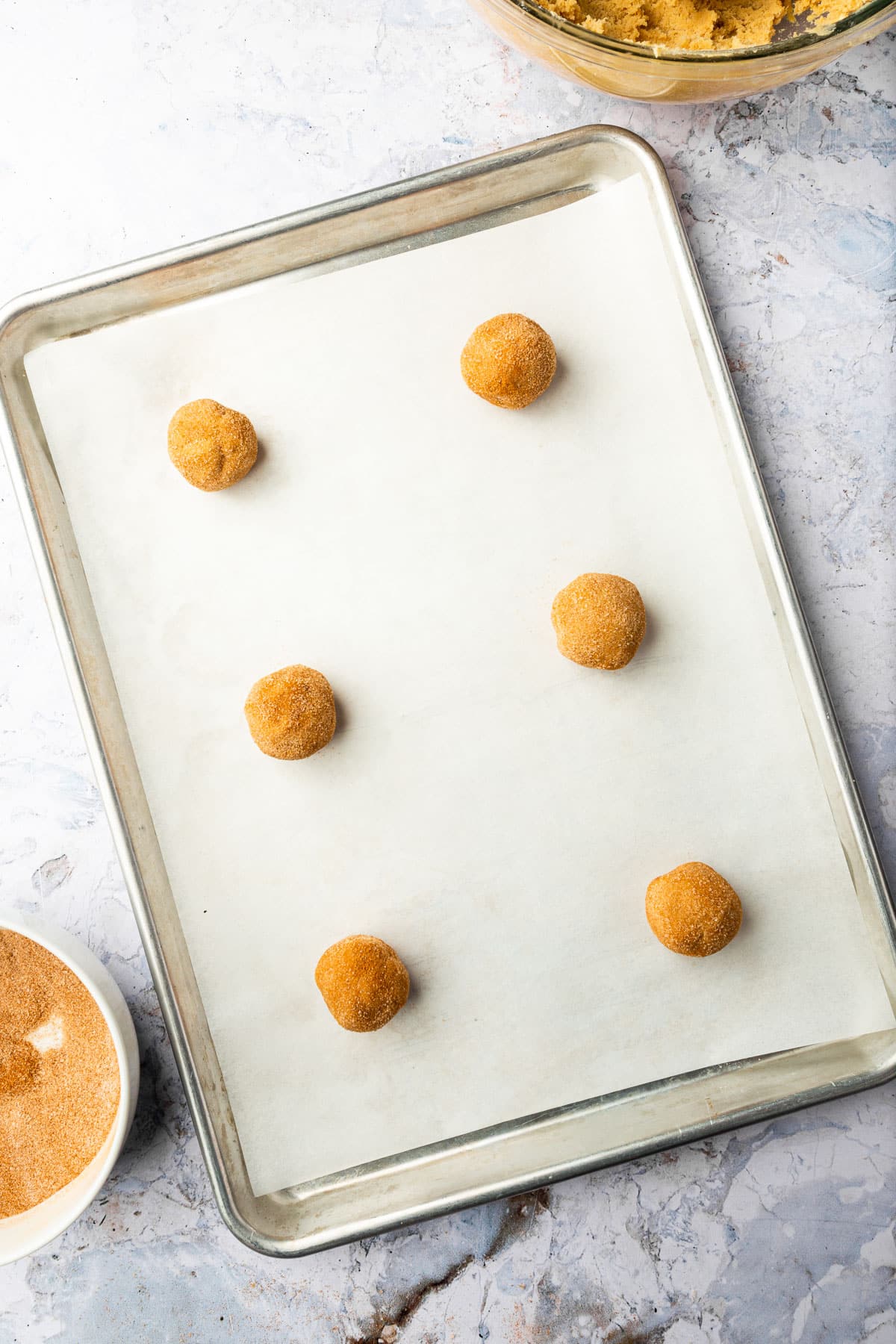
- Scoop the dough into 2-tablespoon balls (about 1.5 oz/42g each). Roll each ball in the cinnamon sugar mixture until fully coated. Keep the remaining dough in the refrigerator between batches.
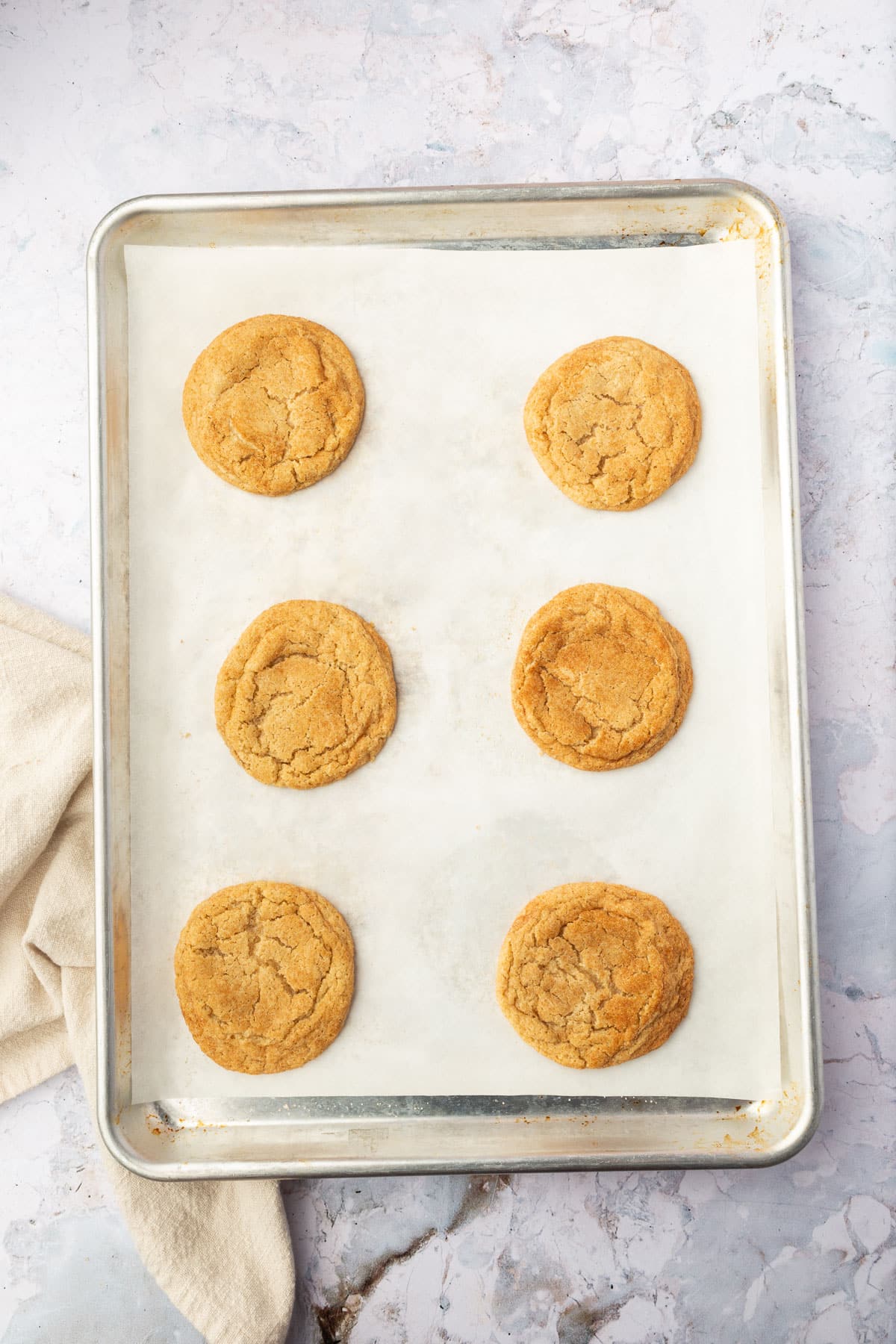
- Place the dough balls on the prepared baking sheets, leaving about 3 inches between each one. Bake 6 cookies per sheet for 9 to 11 minutes, until the edges are set and the center no longer looks shiny. Do not overbake.
- Let cool for 5 minutes on the baking sheet before transferring to a wire rack. Repeat with the remaining dough.
Notes
- Flour Blend: This recipe has been tested with Bob’s Red Mill 1-to-1 Gluten-Free Baking Flour and King Arthur Measure for Measure. Both already contain xanthan gum. I cannot verify results with other flour blends.
- Measuring Flour: For best results, weigh your flour with a food scale. If using measuring cups, spoon the flour into the cup and level it off with a flat edge. Do not scoop directly from the bag.
- Chilling the Dough: Don’t skip this step. It hydrates the gluten-free flour, reduces grittiness, and keeps the cookies from spreading flat on the baking sheet.
- Baking Two Sheets: If baking two sheets at once, rotate their positions halfway through for even results.
- Storage: Store in an airtight container at room temperature for up to 4 days or freeze for up to 3 months.
