
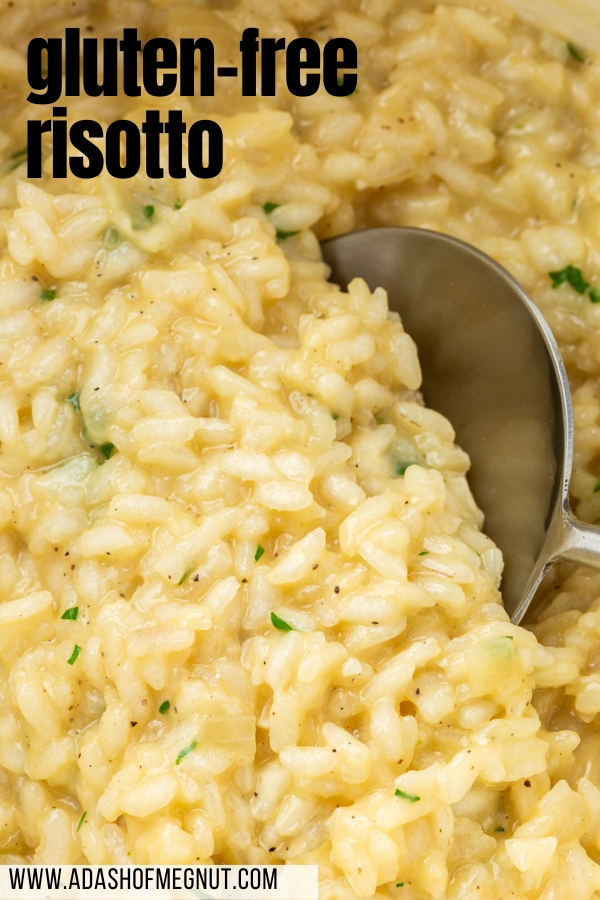
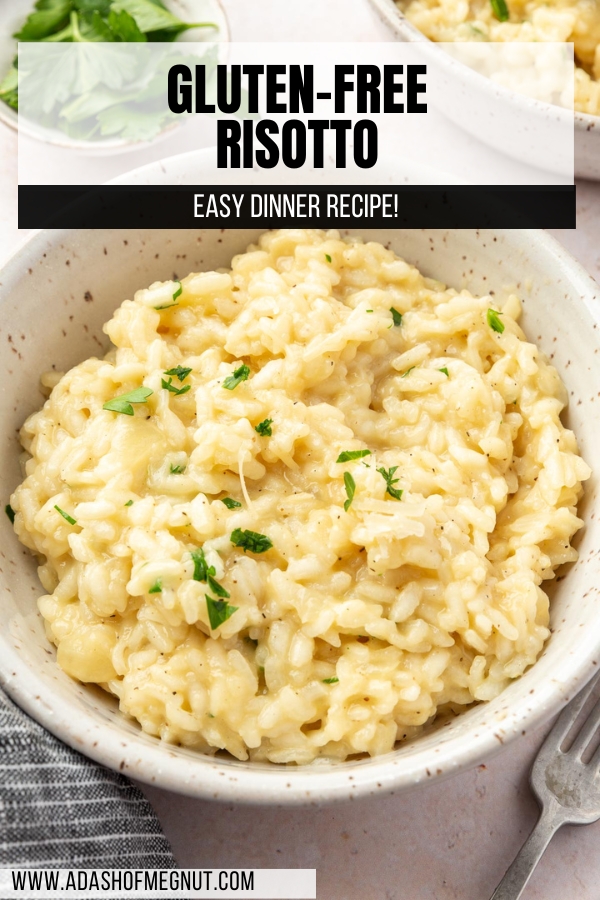
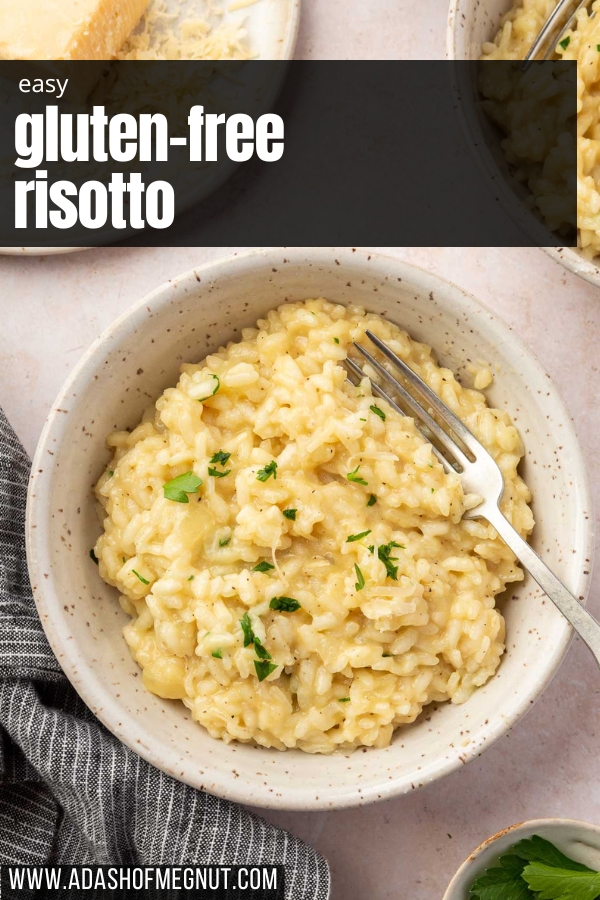
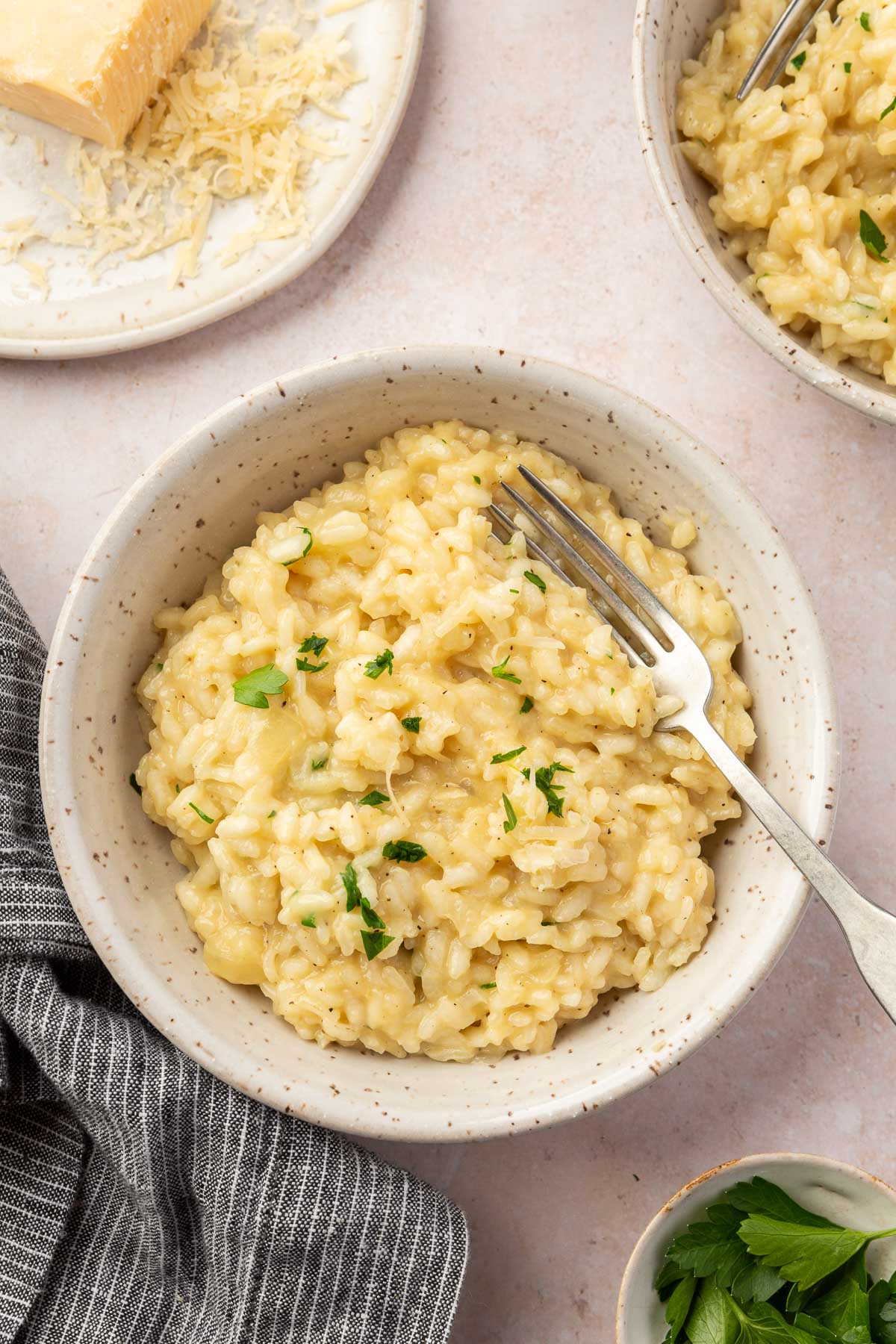
Risotto is already naturally gluten-free, but that doesn’t mean every version you’ll encounter is safe. The broth is the most common issue, and some restaurants add flour-thickened sauces or use cross-contaminated equipment. Making it at home means you control every ingredient, and this version is one I’ve made more times than I can count.
The technique is the same as a traditional risotto: toast the rice, add wine, then add warm broth a ladle at a time and stir until each addition is absorbed. It takes about 20 minutes of active stirring, but the result is a creamy, comforting bowl that works as a weeknight dinner or something more special. Once you have the base down, you can take it in any direction: pea and asparagus with burrata, pumpkin mushroom, or topped with butter poached lobster for something more impressive.
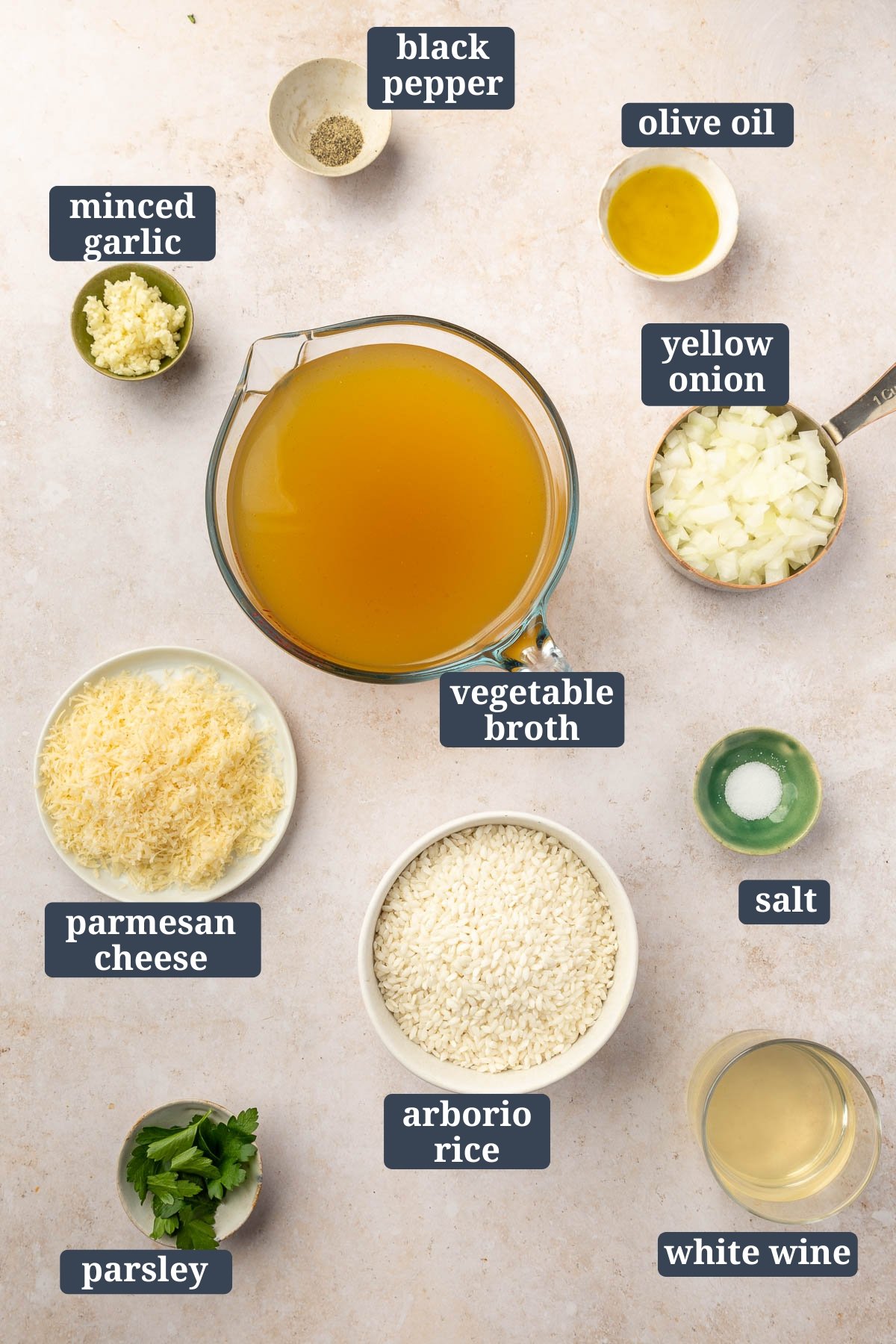
Ingredient Notes
- Vegetable broth (or chicken broth) – I use vegetable broth to keep it vegetarian, but chicken broth adds more depth if that’s not a concern. Either way, make sure it’s labeled gluten-free.
- Extra virgin olive oil – Use a good one here since it’s one of the main flavors in the base. You can also use butter if you prefer.
- Yellow onion – Any mild onion works. White onion or shallots are both fine substitutes.
- Garlic – Fresh cloves only. Garlic powder won’t give you the same flavor in the base.
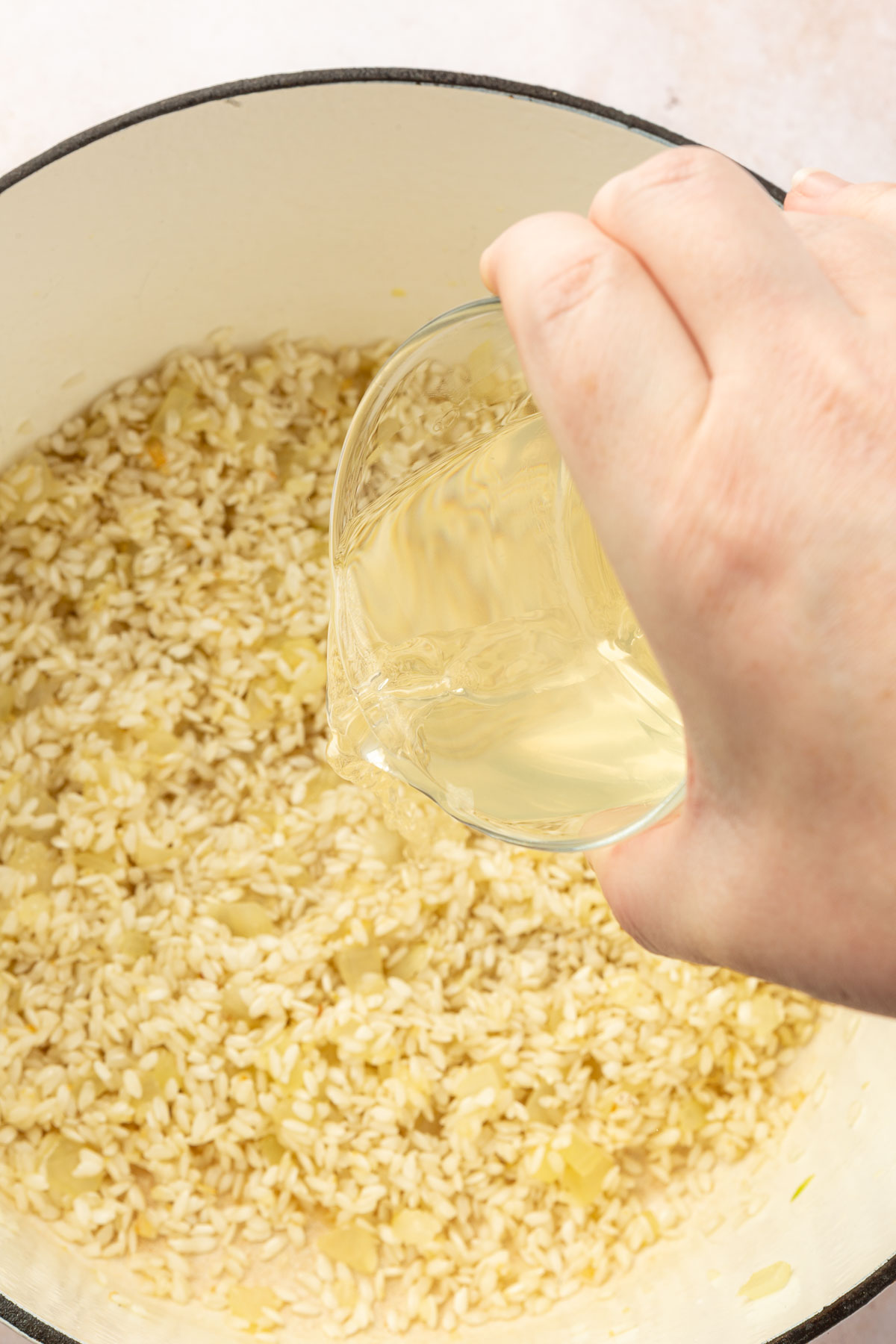
- Dry white wine – Use something you’d actually drink. I like sauvignon blanc, pinot noir or pinot grigio. Sometimes I’ll even use a really dry riesling since that’s one of my favorites to drink and I always have it on hand. If you’d rather skip the wine, sub in extra broth.
- Arborio or Carnaroli rice – Don’t rinse it. The starch is what makes the risotto creamy.
- Parmesan cheese – Grate it fresh from a block. Pre-shredded doesn’t melt as smoothly. For dairy-free, I like Follow Your Heart Dairy-Free Parmesan Style Shreds.
- Kosher salt – Start with less than you think you need, especially if your broth is already salted.
Keep Your Broth Hot
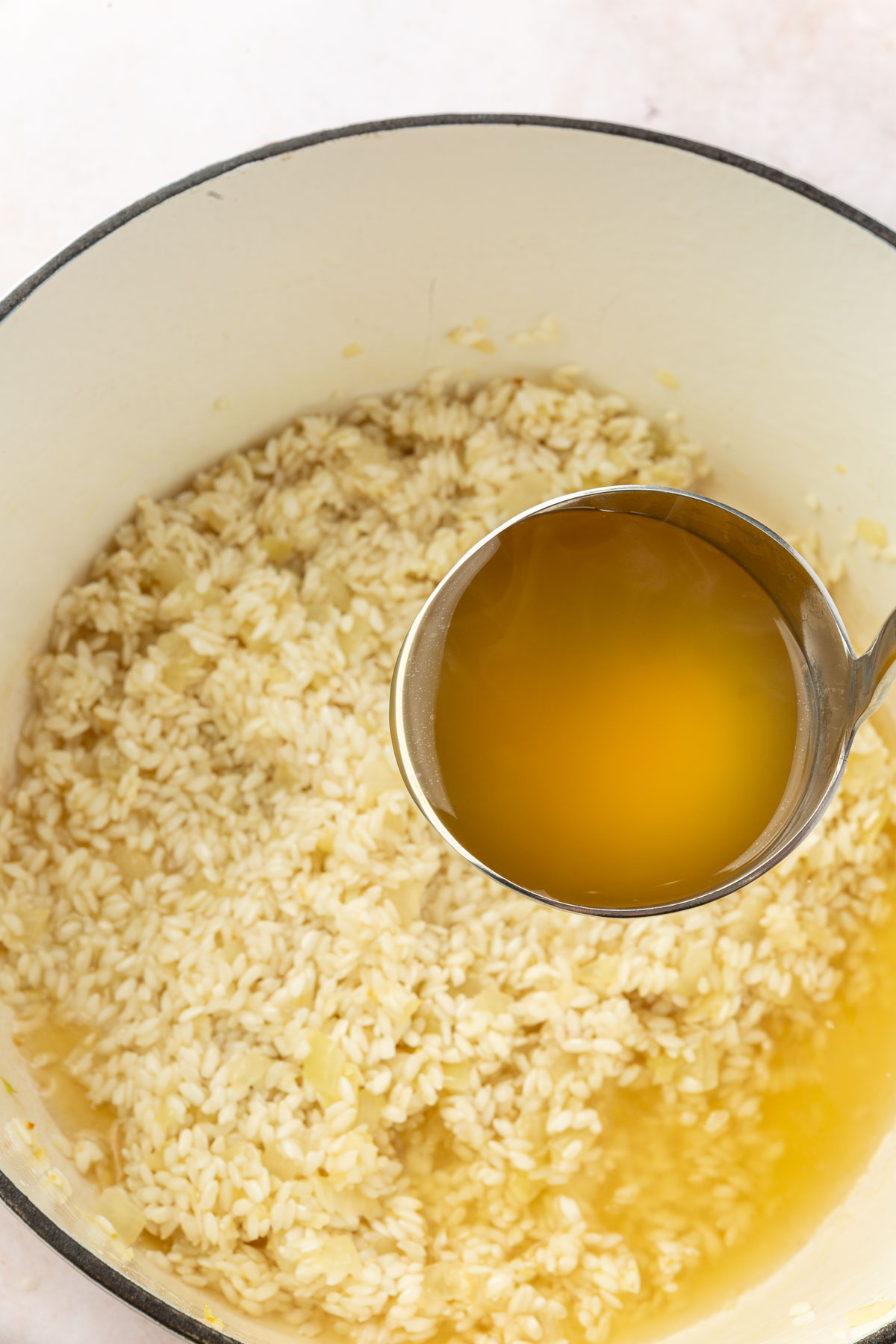
Warm your broth in a separate pot before you start and keep it at a gentle simmer throughout. Cold broth added to hot rice drops the temperature and throws off the cooking process. Hot broth keeps everything moving at the right pace.
Step-by-Step Instructions
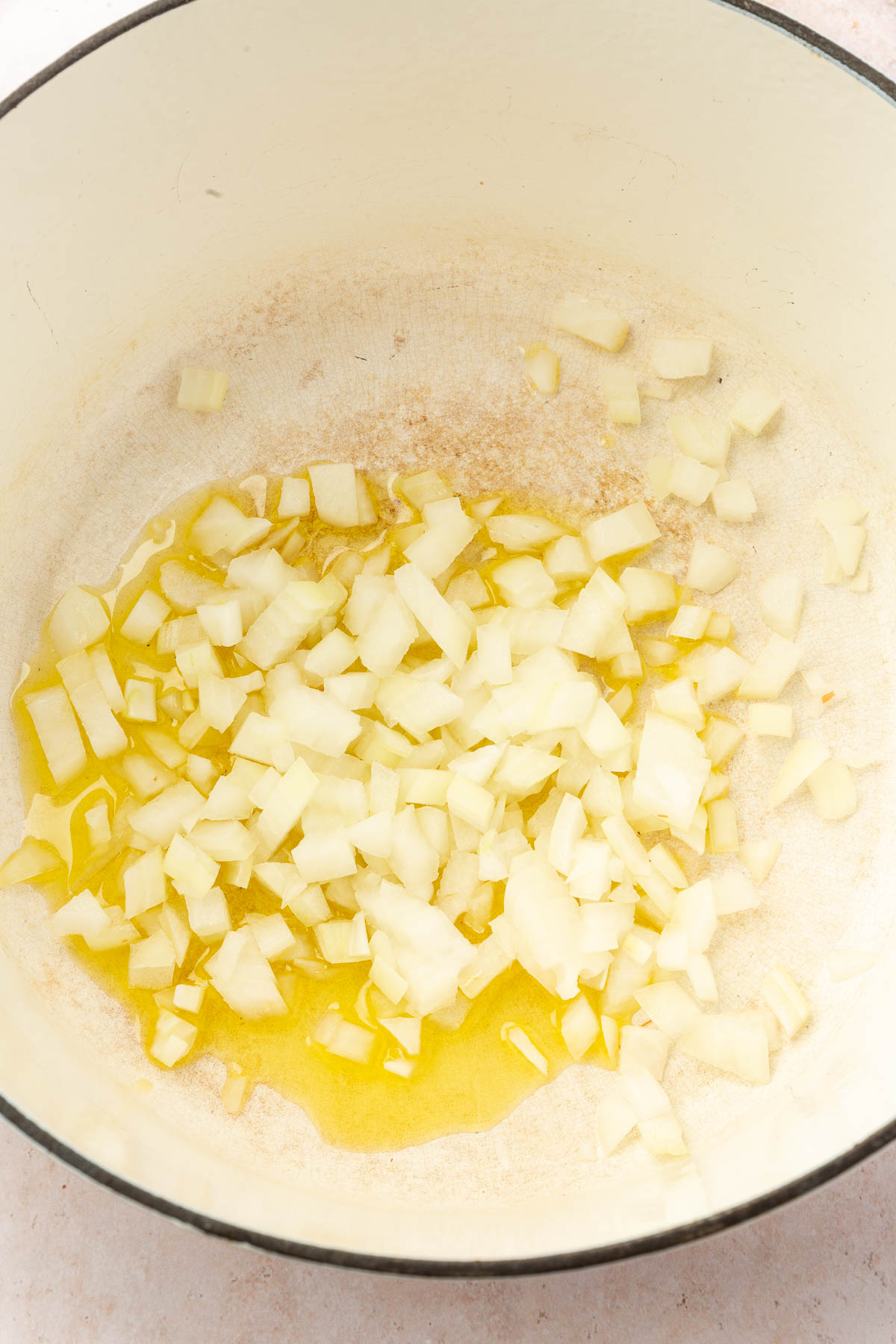
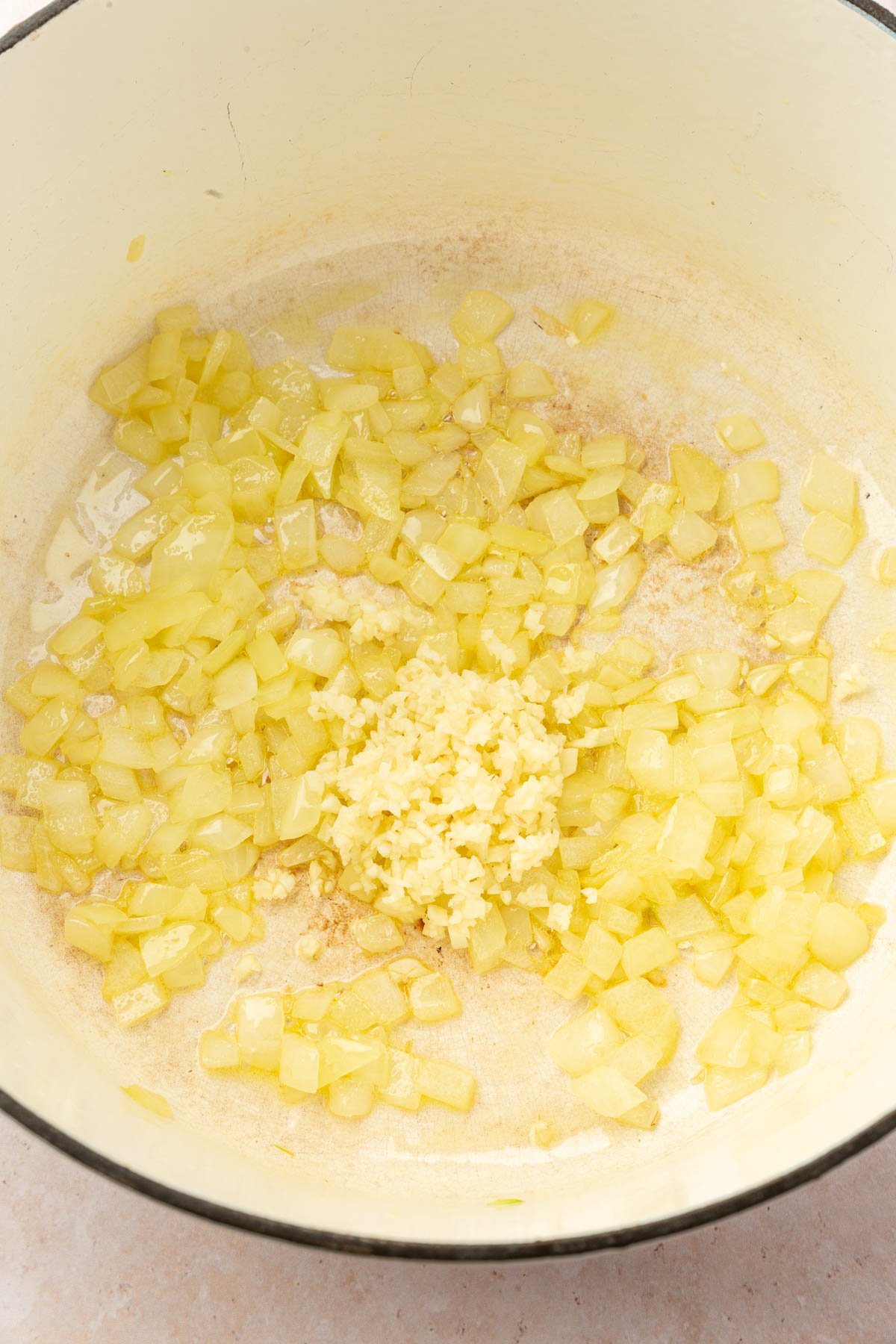
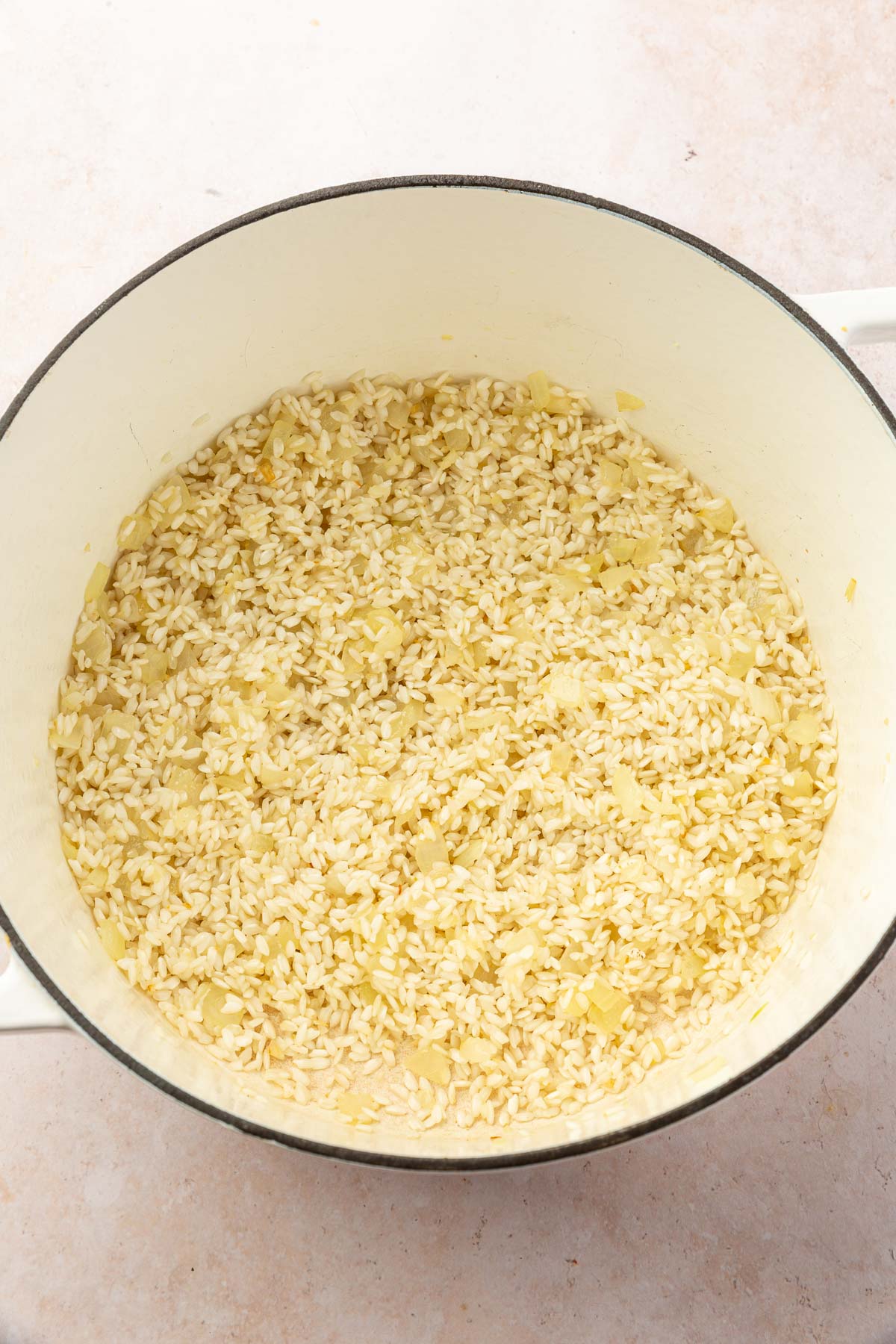
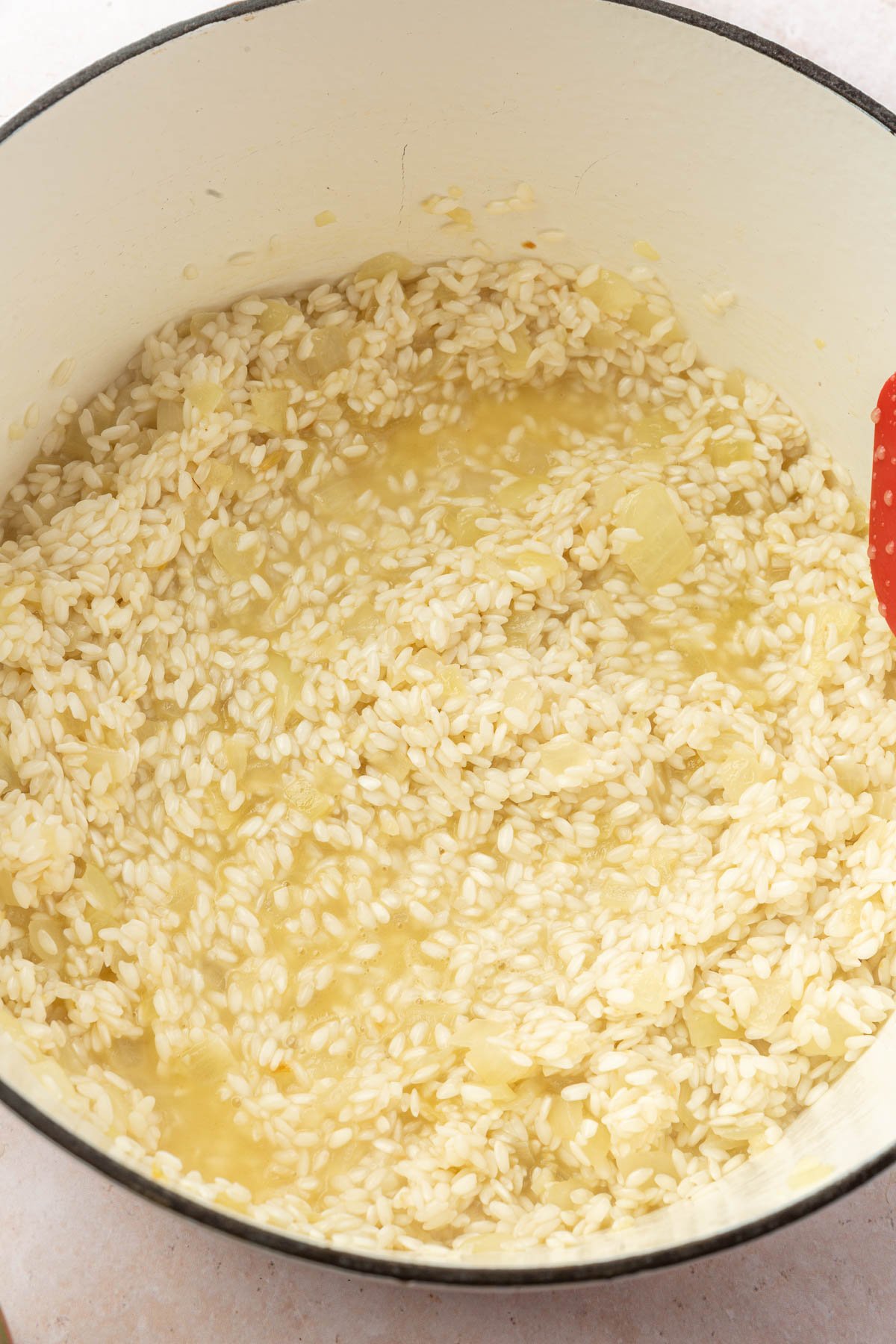
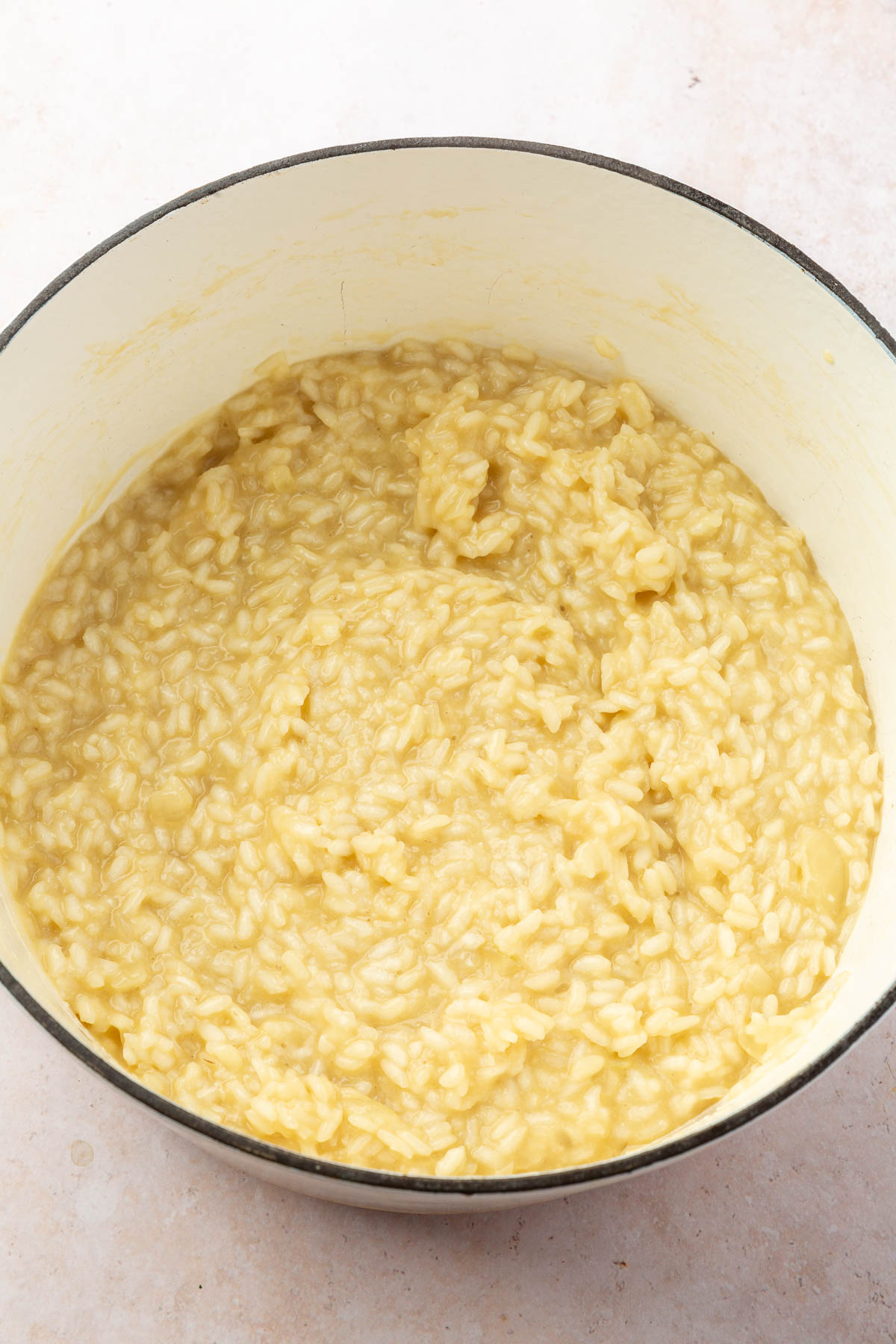
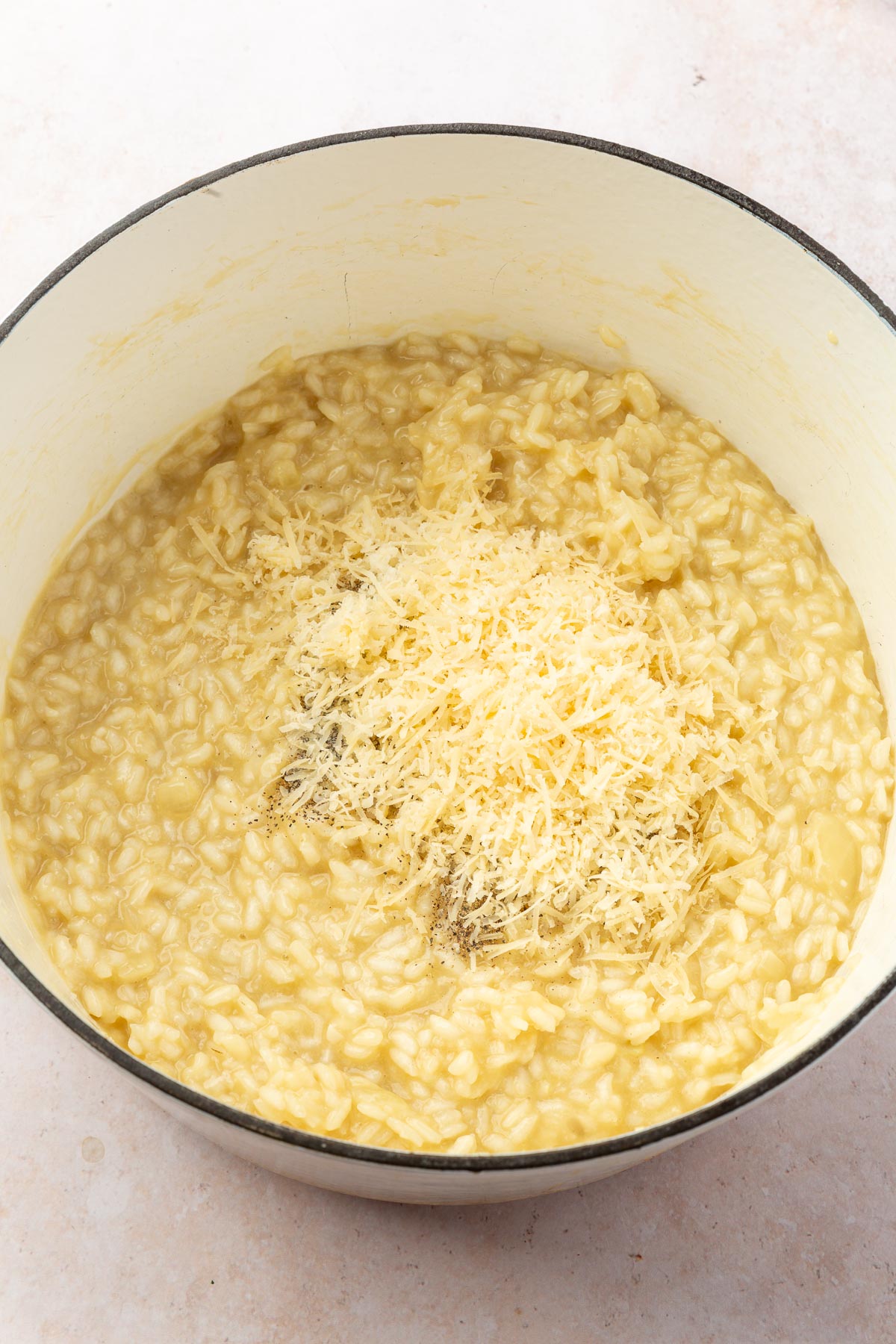
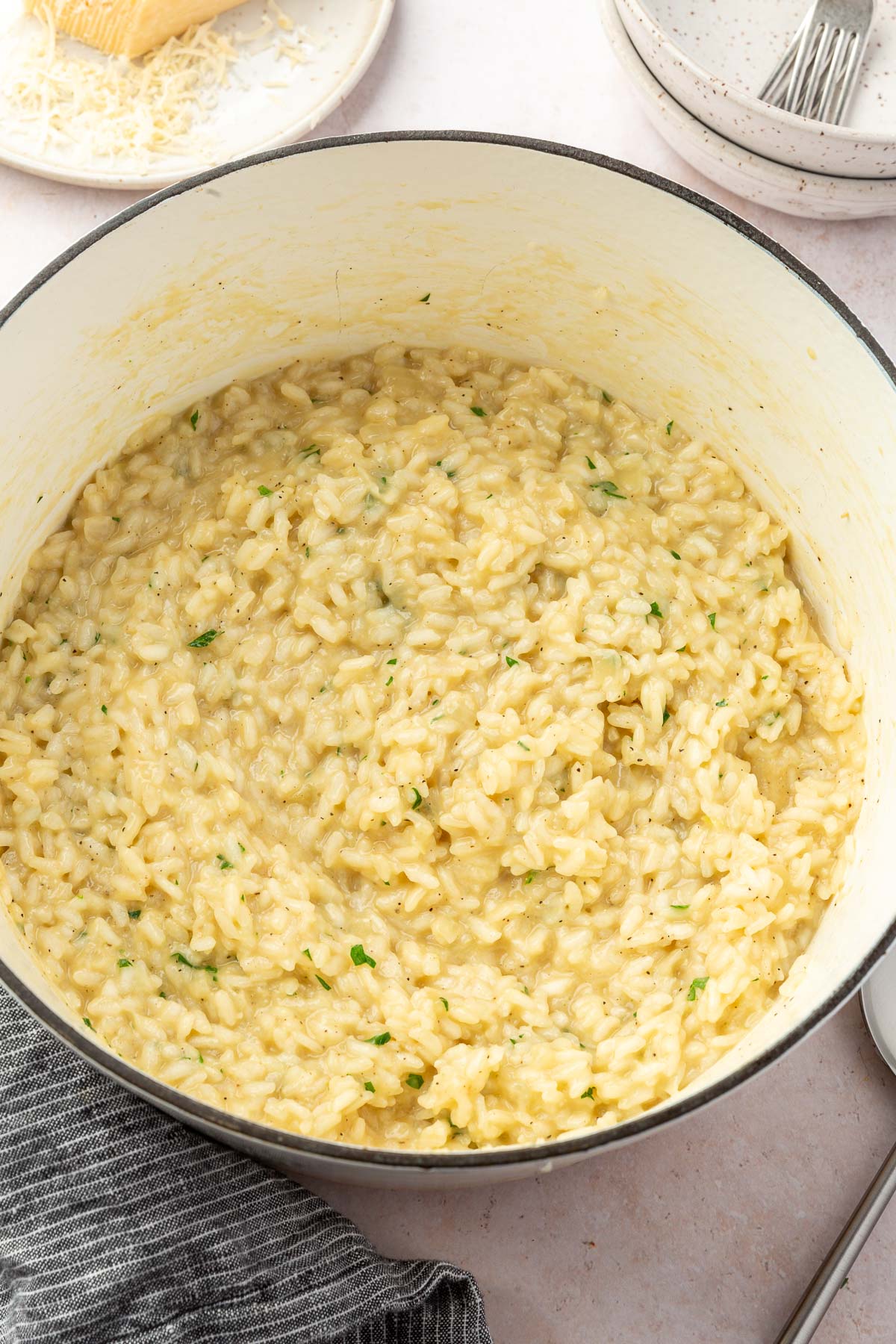
While gluten free risotto takes some hands-on time to make stirring it over the stove, the ingredients are few and the actions are so simple! You’ll have a delicious dinner on the table in no time! The below steps with matching photos are not meant to be the full recipe, but are there to help you see the recipe at various stages so you can make risotto at home perfectly every time!
For the ingredient list with measurements, full instructions, printable recipe, and additional notes, please scroll down to the recipe card.
Recipe FAQs
Yes, risotto is naturally gluten-free. Arborio and Carnaroli rice are both gluten-free grains, and the basic ingredients like olive oil, onion, garlic, wine, and Parmesan are all gluten-free. The one thing to check is your broth. Not all broths are gluten-free, so look for one that’s labeled as such.
Arborio or Carnaroli. Both are short-grain varieties with a high starch content, which is what gives risotto its creamy texture. Long-grain rice like basmati or jasmine won’t work the same way.
Yes. I have a full Instant Pot lemon risotto recipe if you want a hands-off version.
Expert Tips
Storage Instructions
- Refrigerator: Risotto is best enjoyed fresh, but if you have leftovers, store in an airtight container for up to 3 days. It will thicken significantly as it cools.
- Reheat: Add leftover risotto to a saucepan over low heat with a splash of broth or water. Stir frequently until warmed through and creamy again. Start with a few tablespoons of liquid and add more as needed.
Serving Suggestions
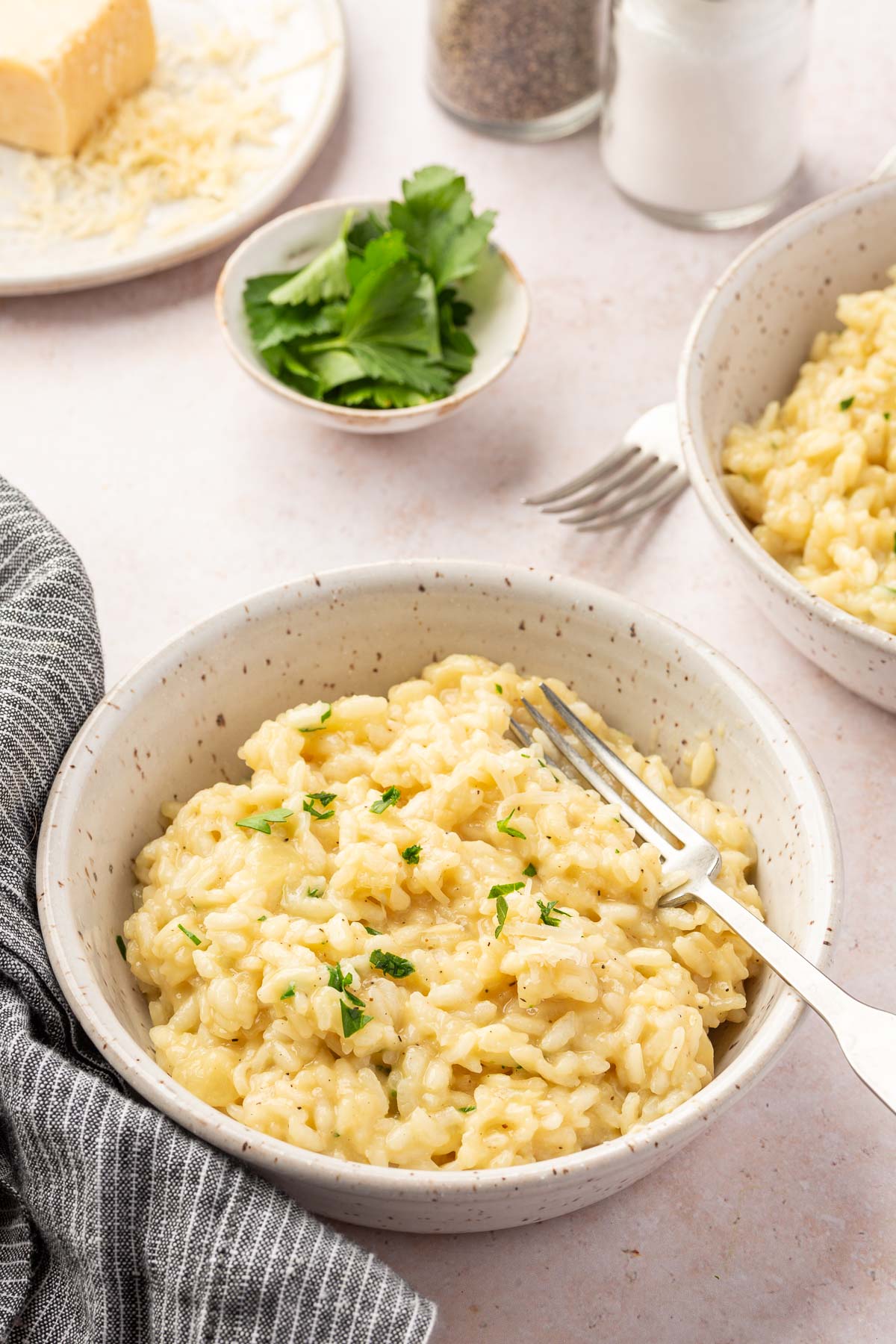
Risotto is a full meal on its own, but it’s also a great base for whatever protein you want to put on top or alongside it. I’ll serve it with gluten-free meatballs for a cozy weeknight dinner, or with gluten-free crab cakes when I want something a little more special. Sautéed shrimp works too if you want to keep it simple. A piece of gluten-free focaccia on the side is never a bad idea for getting every last bit out of the bowl.
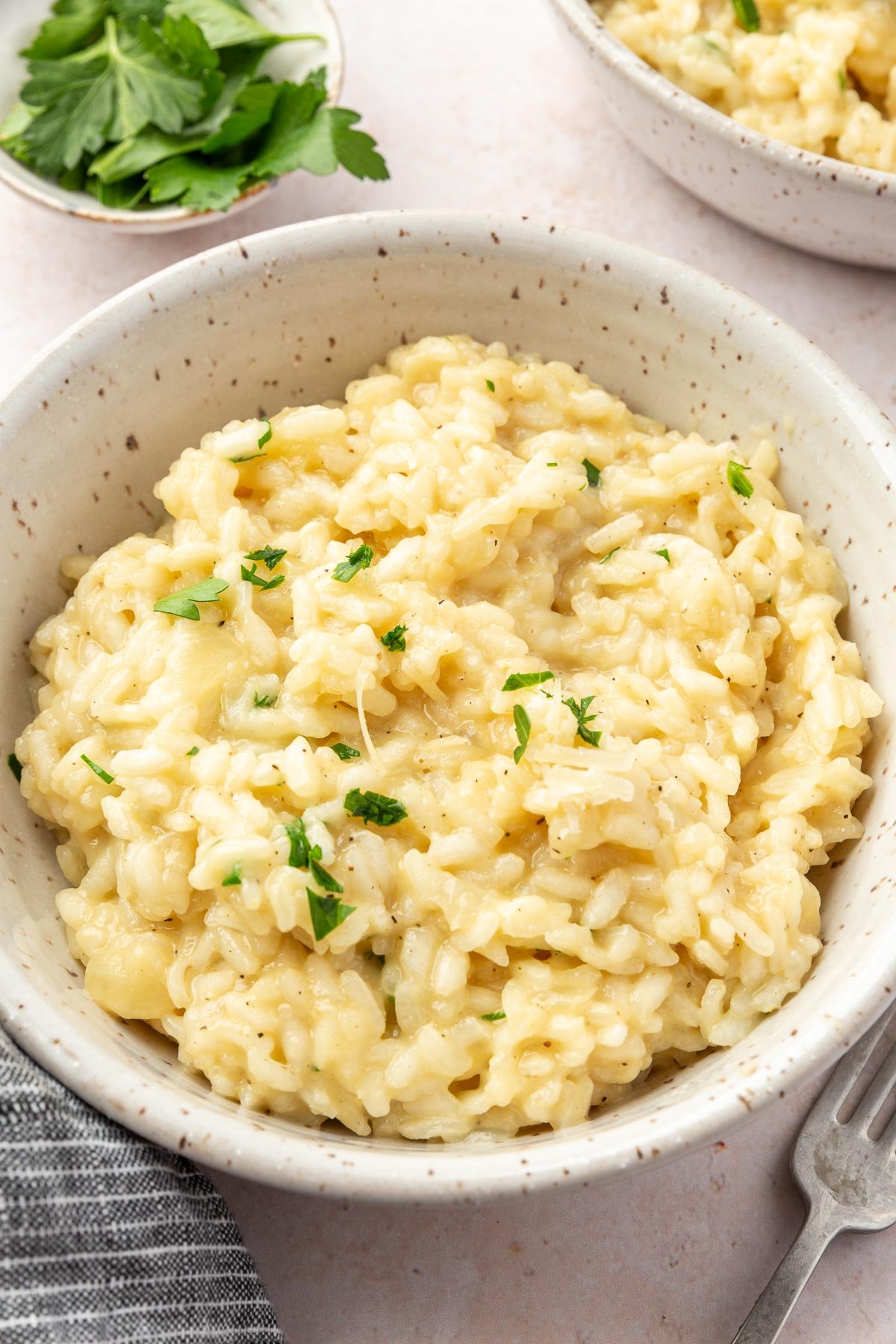
Gluten-Free Risotto
Ingredients
- 6 cups (1.42 kg) vegetable broth - or chicken broth
- 2 tablespoons (30 g) extra virgin olive oil
- 1 cup (125 g) yellow onion - finely diced (from ½ yellow onion)
- 3 cloves garlic - minced
- 2 cups (360 g) arborio rice - or carnaroli rice
- ½ cup (120 g) dry white wine
- ½ cup (30 g) freshly grated Parmesan cheese
- ½ teaspoon kosher salt - or to taste
- ¼ teaspoon ground black pepper - or to taste
- 1 tablespoon (4 g) chopped fresh parsley
**Use the toggle button above to turn the instruction photos on and off!
Instructions
- Bring 6 cups (1.42 kg) vegetable broth to a simmer in a medium saucepan. Keep it at a low simmer throughout.
- Heat 2 tablespoons (30 g) extra virgin olive oil in a large saucepan or Dutch oven over medium heat. Add 1 cup (125 g) yellow onion and cook for 4 to 5 minutes, until soft and translucent.
- Add 3 cloves garlic and cook for 1 minute.
- Add 2 cups (360 g) arborio rice and stir to coat with the oil. Toast for 2 minutes, stirring frequently.
- Pour in ½ cup (120 g) dry white wine and cook for about 2 minutes, until the rice has absorbed the wine. Reduce heat to medium-low.
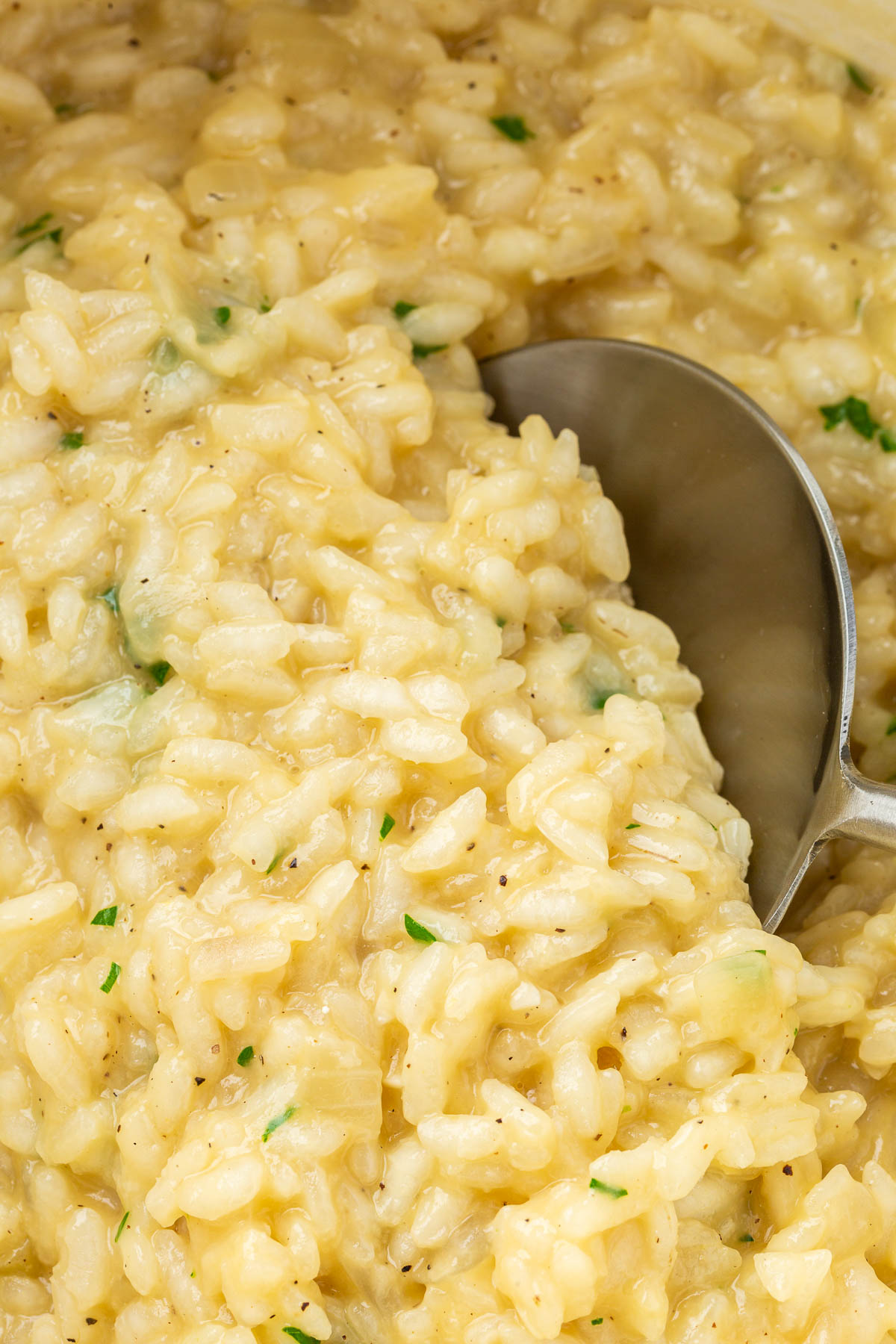
- Add the warm broth ½ cup at a time, stirring continuously until each addition is almost fully absorbed before adding the next. Continue until the rice is creamy and al dente, about 20 minutes total.
- Stir in ½ cup (30 g) freshly grated Parmesan cheese, ½ teaspoon kosher salt, ¼ teaspoon ground black pepper, and 1 tablespoon (4 g) chopped fresh parsley. Cook for 1 more minute. Serve immediately with additional Parmesan and parsley if desired.
Notes
- Broth: Make sure your broth is labeled gluten-free. Some brands contain gluten. Most bouillon cubes and Better Than Bouillon are not gluten-free.
- Patience: Add the broth slowly, half a cup at a time. Let each addition absorb almost completely before adding the next. Rushing this step is the main reason risotto turns out gluey instead of creamy.
